Everyone Wears Alpaca (Cusco)

Alpaca Ladies.

If the tourists in Cusco were wearing anymore alpaca, they would be clomping around on all fours, chewing on grass. 

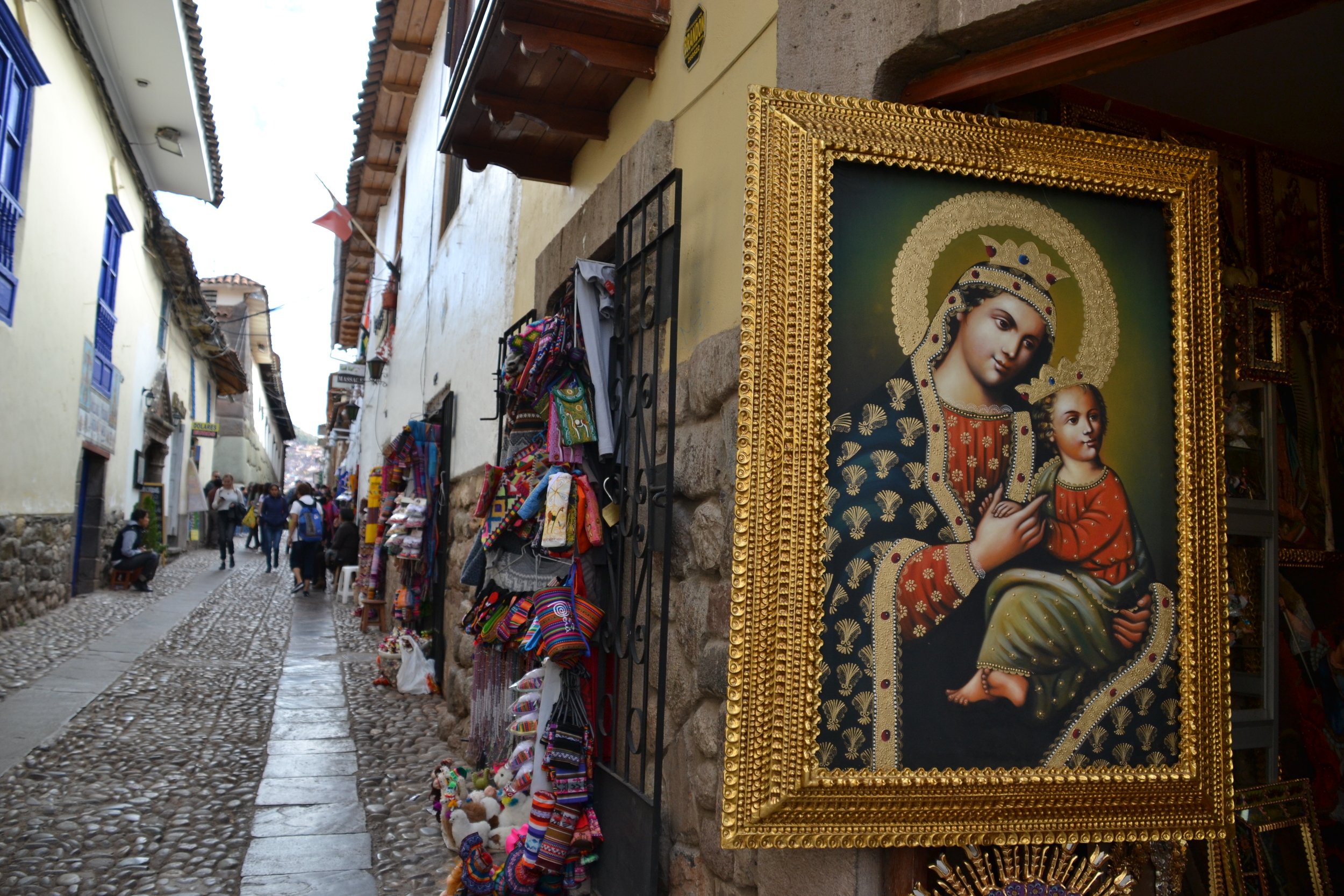
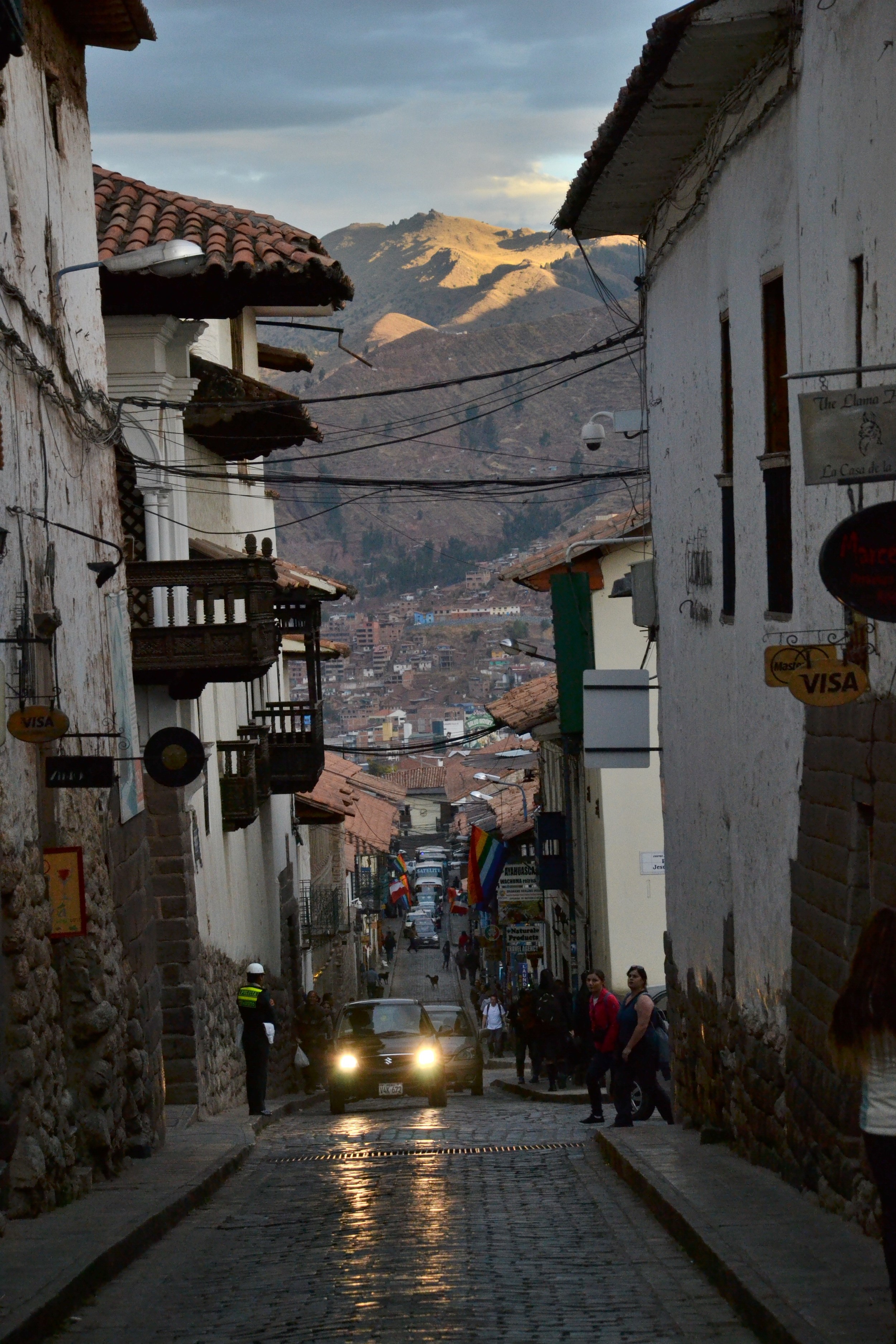
Cusco was once the Inca capital of Peru, until the Spanish arrived and replaced most of it with churches (a familiar tale throughout South America). It's now the country's most popular tourist destination, a baroque hive of travel agents offering treks to nearby famous landmarks like Manchu Pichu and Rainbow Mountain.

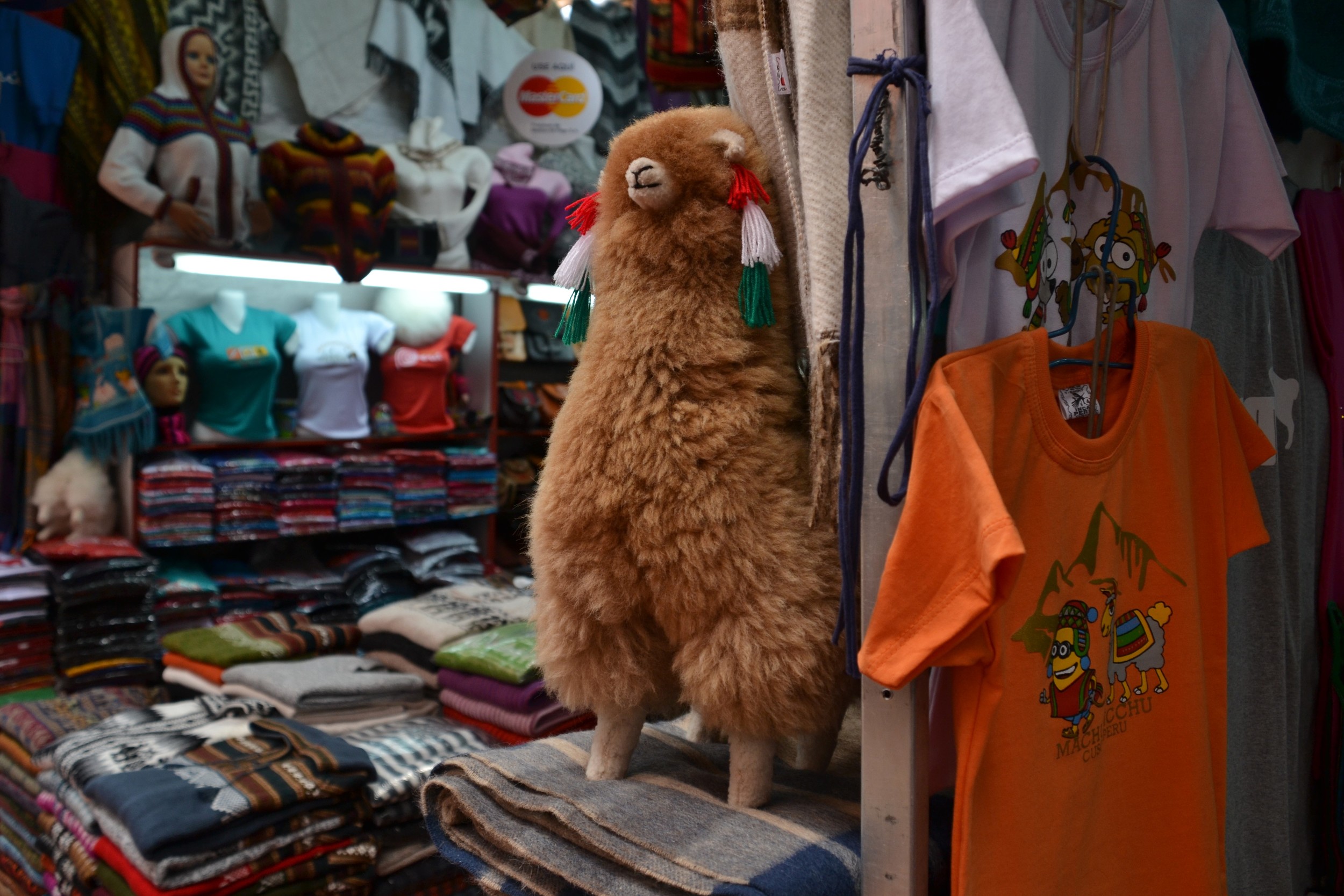
Every third shop in Cusco sells supposedly pure alpaca clothing--slippers, socks, scarves, ponchos and fleeces, available in dizzying a variety of shapes and sizes. In practice, most of what's on sale is at least partially synthetic, and nothing marks you out as a tourist more than wearing a giant alpaca fleece, decorated with little alpaca patterns. But it's still impossible to leave the city without buying at least something with an alpaca label on it. Buying alpaca is what you do in Cusco, if you're visiting.

You can even meet some in person. A quick walk around the city will reveal plenty of the animals, working the curb. 

***

Cusco. 

The most common touts in Cusco are the Alpaca Ladies.

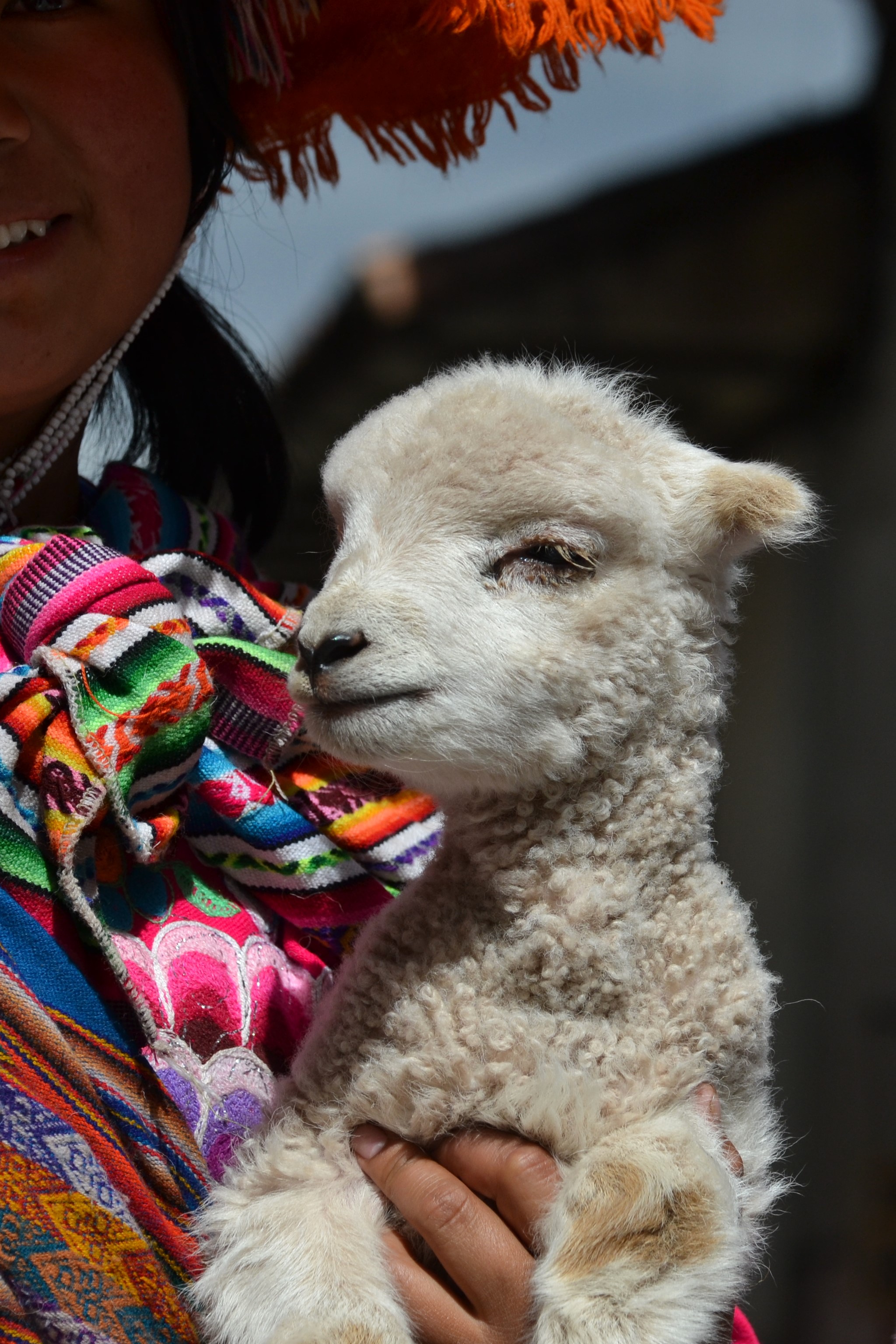
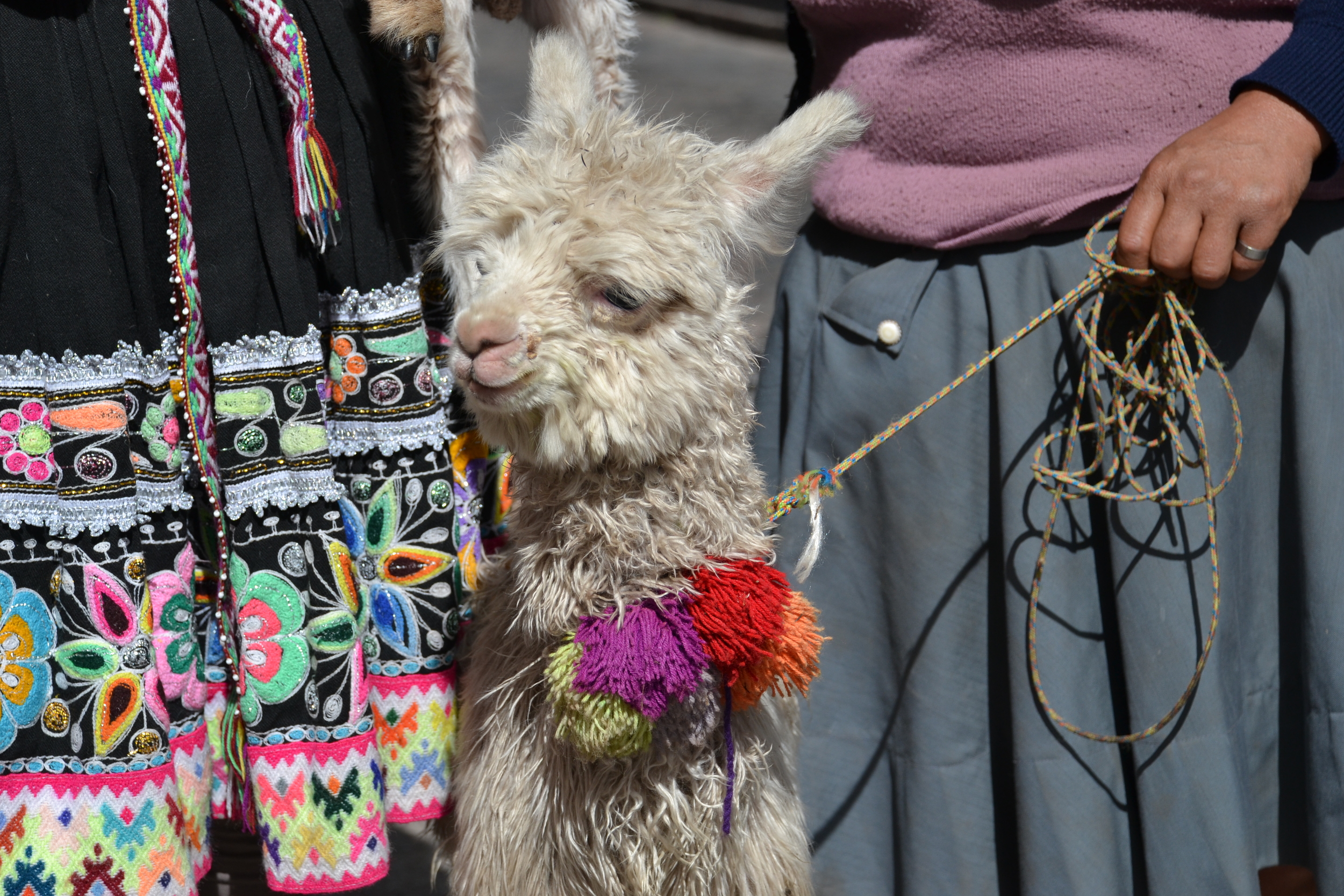
These are women colourfully dressed in traditional Quechuan garb, who rove Cusco's cobbled streets dragging alpacas (and occasionally small llamas) behind them on leashes. The beasts tolerate this with resolutely wry expressions, as if they are quietly in on some top-secret joke--even as they're hauled before tourist groups to serve as portable photo opportunities. 

'You pay what you like,' these Ladies will say, offering travellers the chance to have their picture taken with the animals. This is usually quickly followed by: 'American dollars okay.' 

Sometimes, the Alpaca Ladies will carry  baby alpacas in their arms (ridiculous creatures which resemble cuddly toys). They'll press these babes onto tourists to hug and hold. If the amount of cash the tourists offer in return is not considered sufficient, the women become insistent on receiving more--if given less than 10 or 20 Soles ($3-$6), they are likely to beg plaintively, or else become aggressively demanding. 

It's how they earn their living, after all.

***
Alpacas, souviners and shopping.

***

Travelling South America without knowing a word of Spanish is a recipe for comic misunderstanding, so I've stopped in Cusco for a couple of weeks to attend a local language school. Called 'Amauta,' the school is located just beside Plaza de Armas, the city's historic centre. Most of its students are either backpackers hoping to brush up on their holas, or young professionals who think Spanish might be useful in their careers. And naturally, most of them have added at least one alpaca garment to their wardrobe.  

One morning, on the way to classes, a fellow student told me a worrying story about the Alpaca Ladies. Apparently, many of these women snatch baby alpacas from their mothers at a young age (much to mother and baby's distress), and keep them in poor conditions, without proper nourishment. It's enough of an issue that some Cusco citizens have begun advocating for the Ladies to be banned. 

In a bustling tourist destination it's hardly surprising that some touts would mistreat their charges, but it feels especially unfortunate in Cusco. After all, this is a city that generates a huge amount of money from silly camelids with flippant expressions. Everywhere you look, tourists are dropping serious Soles in shops to take a little alpaca fur home to snuggle with. 

Getting up close with alpacas is what you do in Cusco.

But it may be a good idea to think twice, before you have your picture taken with one.

EXTRA BITS:

> Cusco has another notable street animal: the dogs. Ownerless mutts patrol the city in packs, wagging their tales and scavenging in garbage, weaving through traffic like fish in water. These dogs seem relatively docile in their attitude, but it's still a bad idea to pet them.

> Peru passed a major law banning animal abuse in 2015, though curiously, this law deems cockfights and bullfights permissible as they are considered part of Peruvian culture

> I brought alpaca socks and gloves, in case you were wondering.

> You can also eat alpaca in Cusco. It's delicious. It also fills one with guilt, like eating a Dr. Suess character. 


A Yellow Kind of City (Landing in Peru)

The city of Lima owes its name to a mispronounciaton.

The river that runs through the city was once called the Limaq by the native people, after a famous Oracle (Limaq means 'talker' in Quechuan). But when the Spanish arrived to build a city in 1535, they mispronounced the name as 'Lima,' and that name has stayed since. 

Colonial powers rarely felt under obligation to get the phonetics right.

***

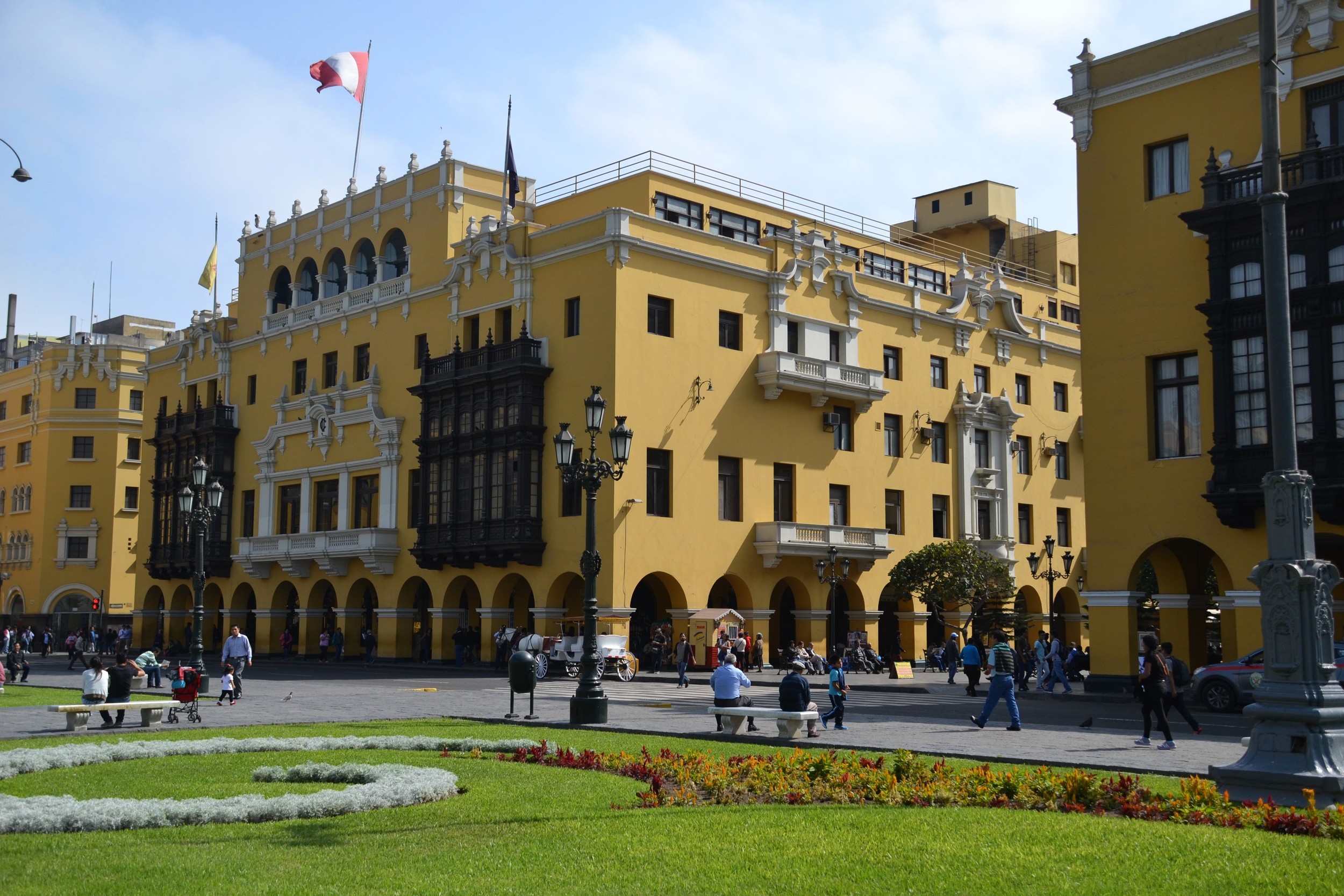
Lima's famous yellow arches. Not golden. That logo belongs to McDonald's.

Lima's Jorge Chávez International Airport is a small airport, located a twenty minute drive from Miaflores--the gentrified area of the city that most guidebooks prod tourists toward. 

Exiting this airport at 01.40 in the morning, I was immediately accosted by a huddle of touts trying to force me into their dodgy-looking taxis, bringing to mind horror stories of unsuspecting tourists being robbed in Lima's unmarked cabs. The chaos of the touts was oddly comforting after the brusque roboticism of America's TSA. It felt a lot more human, by comparison.

I didn't take an unmarked cab. My hostel in Miaflores sent a taxi out to me, for only 60 sols (about $20.) It seemed like the safer option. 

I  didn't say I minded the guidebook's prodding, after all.

***

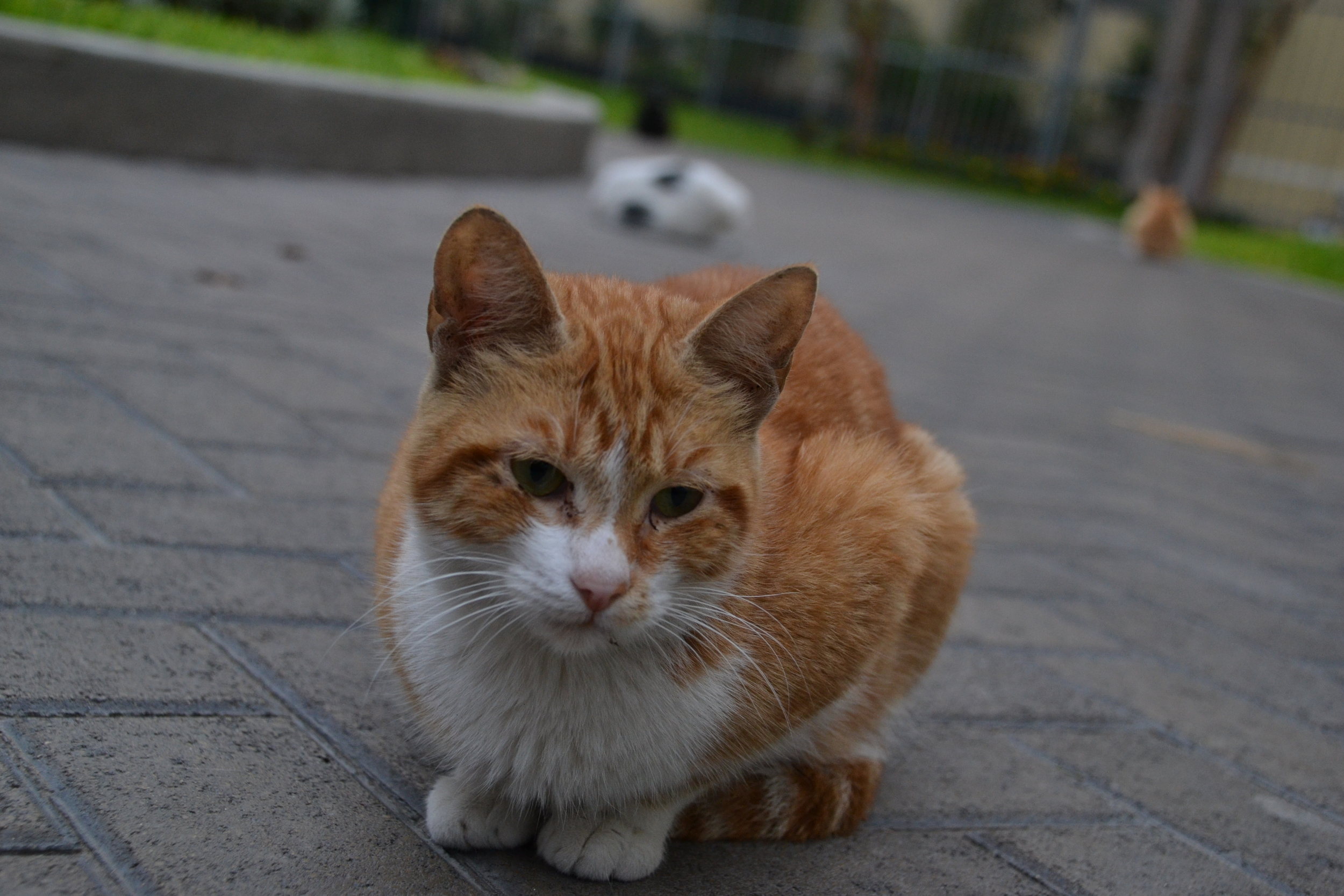
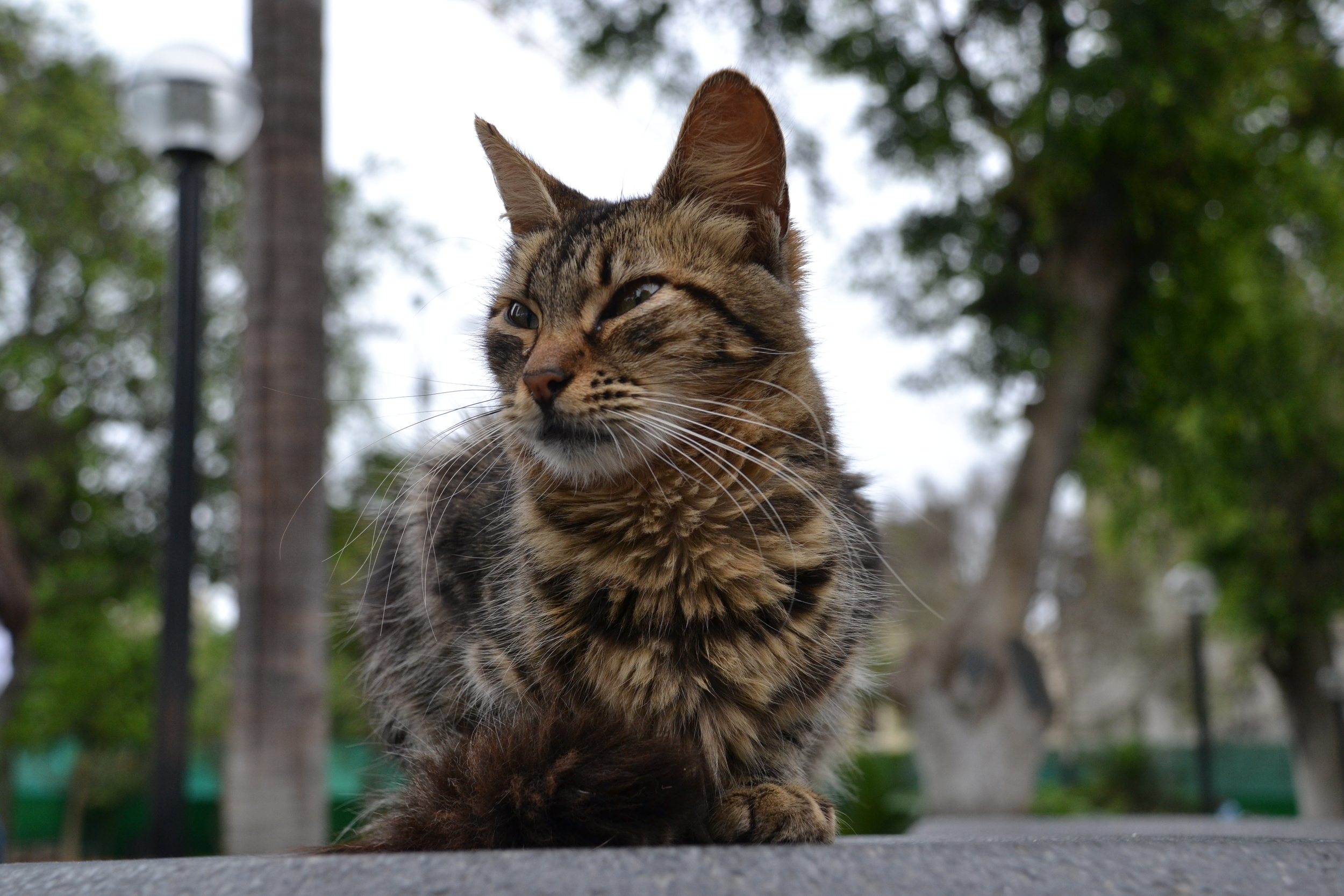
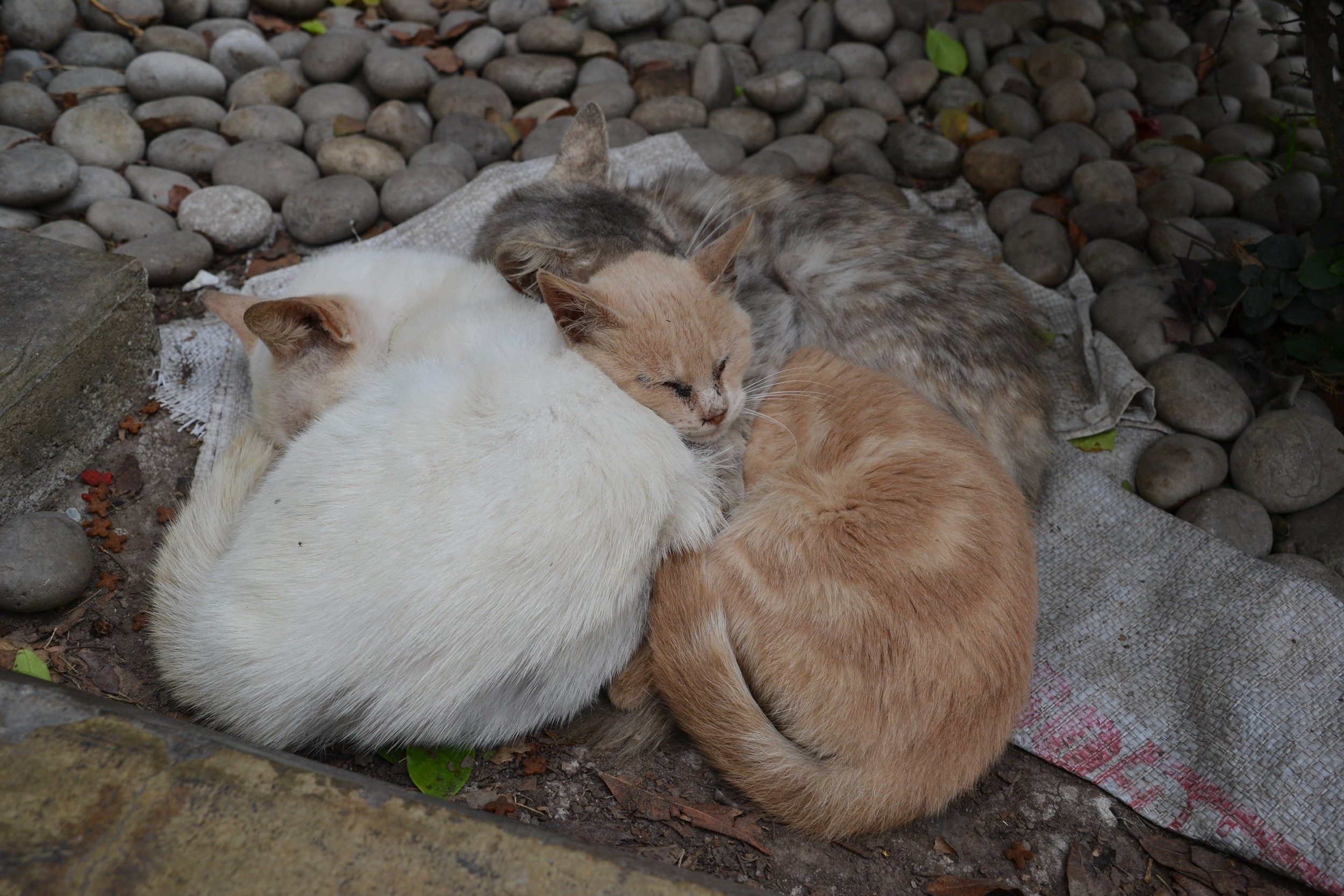
In Lima's famous Kennedy Park, stray cats congregate from across the city, to be fed by locals. At night, there's sometimes dancing amid the cats. 

***

Lima is the capital of the Peru; its largest city, perched on the coast. It's the second largest city in the Americas, and a draw for visitors and migrants from across the continent. So much so, in fact, that the city is bordered by shanty settlements called Pueblos Jóvenes, scrappy hospots of crime and poverty seething in semi-legitimacy on the city's edges.

Unfortunately for its non-shanty architecture, Lima is located in an area known as the Ring of Fire--a part of the Pacific Rim prone to intense earthquakes. Over the years, great chunks of the city have needed to be repaired and rebuilt, usually to the latest architectural fashions. This has left the city a bit of a jumble when it comes to building styles, with its most distinctive features being the bright yellow blocks with bright yellow arches that stand out amid small flower gardens in the centre of town.

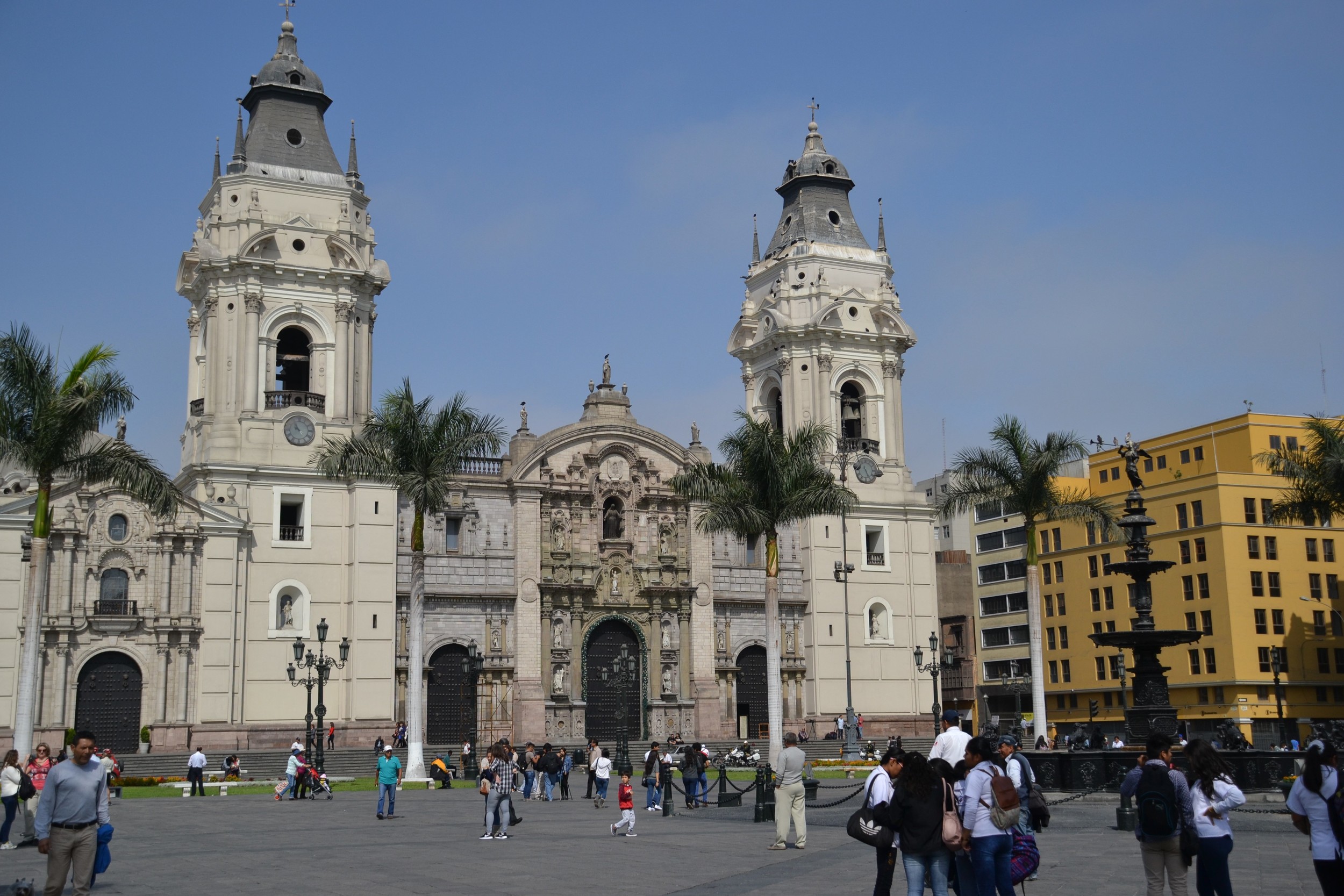
It may be karma. When the Spanish came to Lima, they decided to build a cathedral right on top of the existing Inca temple, destroying it in the process. Since the, thanks to Lima's position on the Ring, the grand Cathedral of Lima has needed to be rebuilt eight times.

Perhaps somewhere there's an angry Inca god, who's trying to get a point across.

***

Across the bridge to downtown Lima


'People from Miaflores say not to go down town,' The tour guide told us, dismissively, 'they say you will get killed, you will get robbed, you will get raped, but no.'

He was a short, lightly lisping man by the name of Arturo, wearing a yellow safety jacket and leading a herd of about two dozen backpackers through Lima's city centre--cameras poised and expressions studiously interested. Our tour group had irritated locals from across the city, clambering on an off public buses on our quest for landmarks to ponder at, and now we were on the edge of Lima's main square, looking across the river to the hustle and bustle of Lima's infamous downtown. 

'The people there are good, hard-working people,' the tour guide said, enthusiastically. A small tank trundled around the tour group, travelling along the bridge to downtown. Apparently this was not an unusual enough event to attract any comment from the tour guide. 'The people there are the real Lima.'

The guide then advised us not to venture downtown without a Peruvian friend or two, as we would likely get our pockets picked.

I wonder about the real Lima. In a city built on a mispronunciation, full of buildings that have been remade so many times, what counts as the real and genuine heart of a place?

The answer is pretty obvious, I guess.

It's whatever the people living there think. Especially the tour guides. 


EXTRA BITS:

>Llama Watch: I have seen a Llama, along with some alpacas. They were being held in a cage in Huaca Puccllana--a set of pre-Inca ruins in the heart of Lima, and in interesting place to tour. They didn't look too happy about it, so I've decided that they don't count.

>Also glimpsed in Huaca Puccllana--Peruvian Hairless Dogs, scrappy creatures who are sometimes put in little shirts and jumpers to keep them warm (and possibly chic) in the cold.

>The Inca deity responsible for earthquakes would in fact be a goddess, in case you were wondering--by the name of Pachamama


A Sunshine State of Mind (Florida)

Florida

I lasted about twenty minutes in Miami. 

That isn’t even time to work up a decent CSI pun.

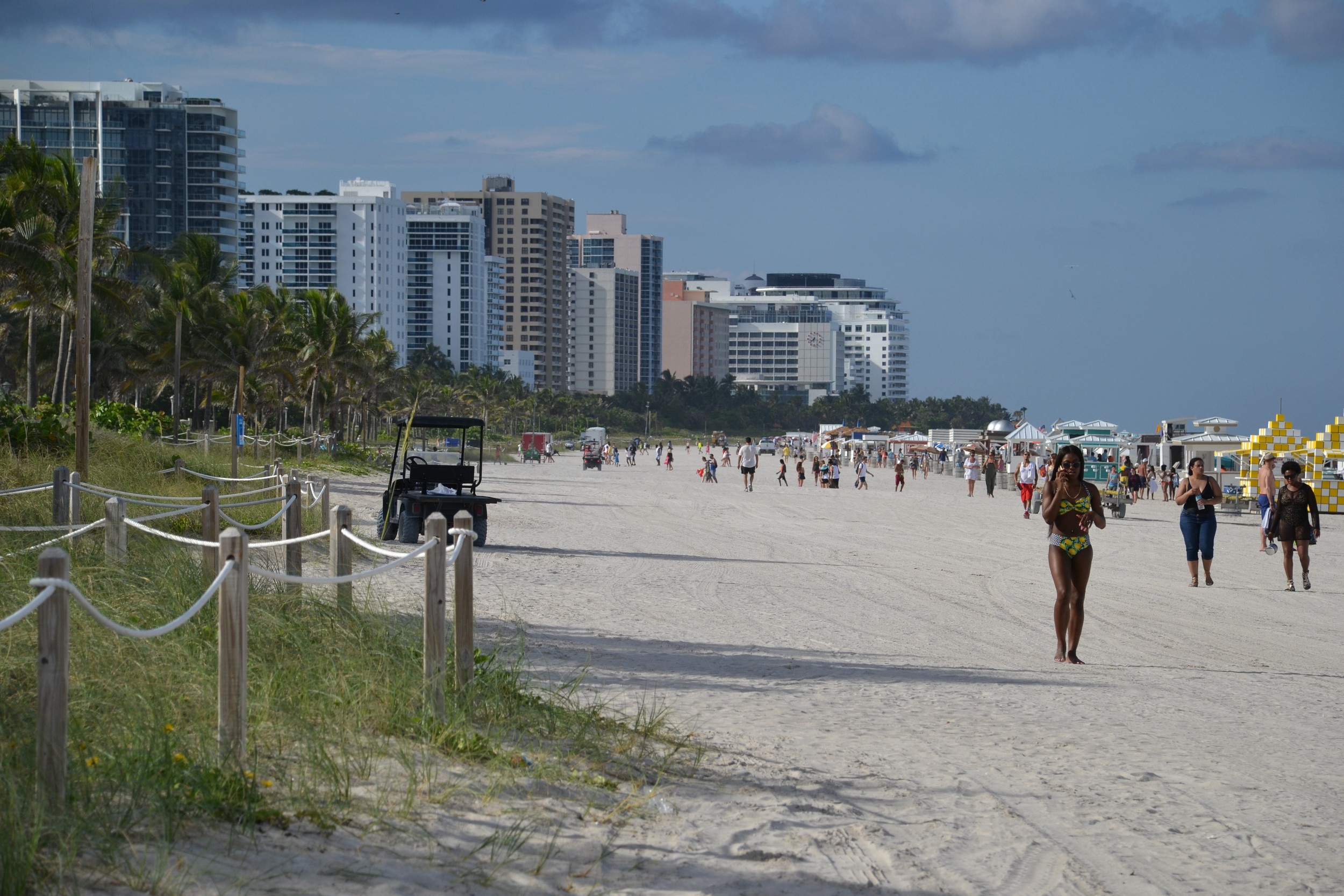
Passing though Florida on the way to Peru, I thought South Beach would be the perfect place to relax for a couple of days in between flights. Instead, I found Miami's seafront strip to be a teeming mess of drunken tourists, lurching in packs between tacky bars, or else leering out from the gated confines of their ugly multi-story hotels.

South Beach is like Ibiza or Magaluf; the kind of place great throngs of tourists come to drink and sun themselves, drowning out much sense of anything else. In this case, things were made worse by the impending Memorial Day celebrations. Streets were cordoned off and public transport was rerouted along strange and winding paths, making navigation a nightmare.

I decided to skip the whole place, and visit Sarasota instead.

***

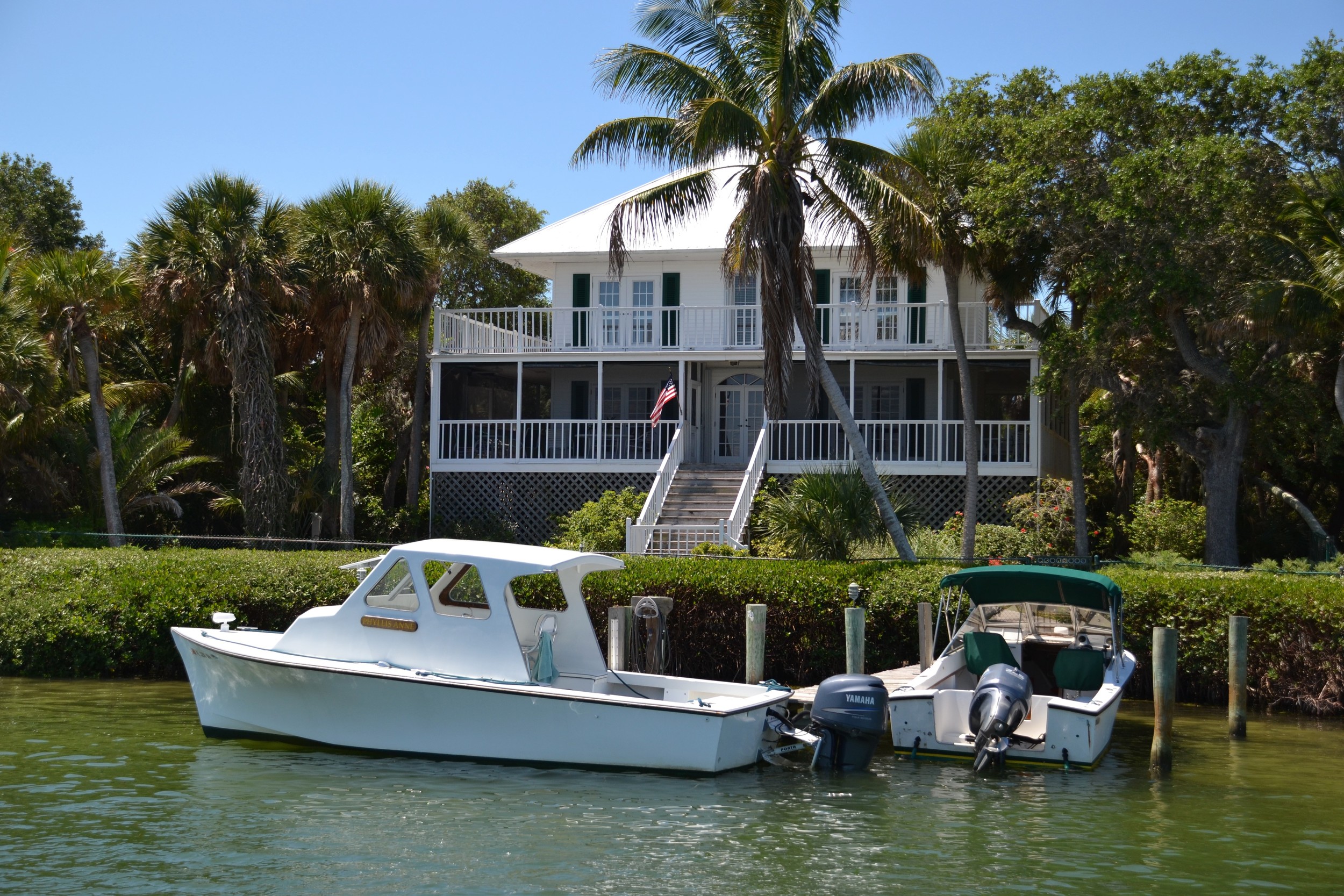
Siesta Key, Sarasota- one of the world's finest beaches, made of white sugar sand.

Sarasota is located across the state from Miami, on Florida’s opposite coast; a few hours drive from Orlando.  A popular holiday destination for the rich, Sarasota is full of beachfront condos that are only occupied for about half of the year, by tourists coming in from far up north

‘We call them Snowbunnies, because they only come for winter,’ I was told by a local resident named Shannon; a perky, ebullient Sarasota housewife whose family was kind enough to invite me into their home for a couple of days. It was a rare opportunity for someone on my budget to see the area, and Shannon's family--a P.E. teacher husband and a precocious son with a Star Wars obsession--were eager for me to enjoy their state. 

Nearby Orlando is also home to Disney World--a weird selection of themed rides and hotels that looks like it should house an evil cult in a 1960s science fiction movie.

Shannon showed me around Sarasota Country in an enormous black land rover. Car is really the only way to explore the area (and indeed most of Florida); Americans like to spread themselves out over large spaces, and Sarasota is made up of chilled beachfronts linked by teaming highways,  abuzz with giant jeeps and SUVs. The roadsides are liberally sprinkled with fast-food eateries, convenience stores, and billboards advertising some very shifty looking medical practitioners. In the grand spirit of Americana, doctors hawk their services through roadside advertisement. 

When I made a comment on the impressive size of Shannon’s vehicle, she explained that driving big cars had become something of a defence mechanism among locals. Apparently, Florida’s impressive population of senior citizens has a predilection for SUVs, not to mention dodgy driving. ‘If somebody hits you,’ Shannon explained, ‘you don’t want to be driving something smaller.’

*** 

Life's a beach.

‘Florida mountains,’ is a nickname for Florida’s impressive cloud formations; billowy, looming white towers of fluff, apt to turn dark and thundery in a hot heartbeat. Like many local homes, Shannon’s house has storm shutters. This is a state that has been prey to more than its fair share of hurricanes, after all.

In general, Florida’s residents have a curious relationship with the weather. Every house, every shop, every car in the state swears by the need for air conditioning, to fend off Florida’s brutal sunshine. Often, the temperature inside are cool to the point of feeling freezing, while temperatures outside are sweltering hot. This creates a strange situation where people endure the summer haze in sweaters and hoodies, to avoid being caught out by the cold next time they go into an air conditioned space.

It's funny, the lengths people will go to in order to be somewhere warm and beach adjacent, like Miami or Sarasota. Deadly old people, hurricanes, shifting temperatures and of course the numerous alligators; Florida's residents put up with them all year round, for the sake of living bright and near the sand. Visitors flock here in droves for extended periods, courting sunburn, for much the same reason. 

That sounds just like human beings, really.

Pick a sunny spot, and work out the details later.
 

A Fairy Tale From New York (Manhattan)

Manhattan

''Please mind the gap between the train and the platform when exiting,' booms a comforting automated announcement on the New York subway system. The deep, rich Mid-Atlantic tones resound with authority in your ear; it sounds like the kind of voice that should be narrating a newsreel from the 1950s.

It’s a stark contrast to the sharp, stern: 'MIND THE GAP,' bellowed by the terrifying Goddess of the London Underground.

New York reminds me a lot of London, really. It’s a huge urban melting pot, full of street food, indie art, and little lives going on between looming towers.

But New York’s towers are bigger. Its melting pot feels hotter (currently at a steamy summer 31 degrees). And it’s announcements are just that tiny bit more calculatedly reassuring.
It’s like London’s all grown up, with extra glass.

***

Time Square. Not quite the iconic shot I planned on taking.

Time Square. Not quite the iconic shot I planned on taking.

If a cynical person were trying to sum up all the bad parts of the American character, they might point to Time Square; that heaving monument to capitalism, filled with flaring advertisements, fractured across a hundred different billboards. A teeming neon scrap of pavement cracking under a relentless flood of tourists with their cameras (yes, including me). A hunting ground for tacky gift-sellers, steaming hot-dog vendors and a scattered selection of plump men in superhero costumes, looking for marks to pose with.

And amid all this, just off the middle of Time Square, stands a US Armed Forces recruiting station, entreating patriots to join up. America’s industrious military complex; an invitation to war, standing amid glittering monuments to money.

It’s such a good metaphor, it can’t possibly be true

Forget it, Jake, it's Chinatown

***

You should never judge a place by its tourist traps.

And it would be easy to pretend that’s all Manhattan is--a dense concrete jungle made up of Empire States and Grand Centrals and Chrysler Buildings. A whole island of things to photograph, with nobody living there except the touts and bartenders.

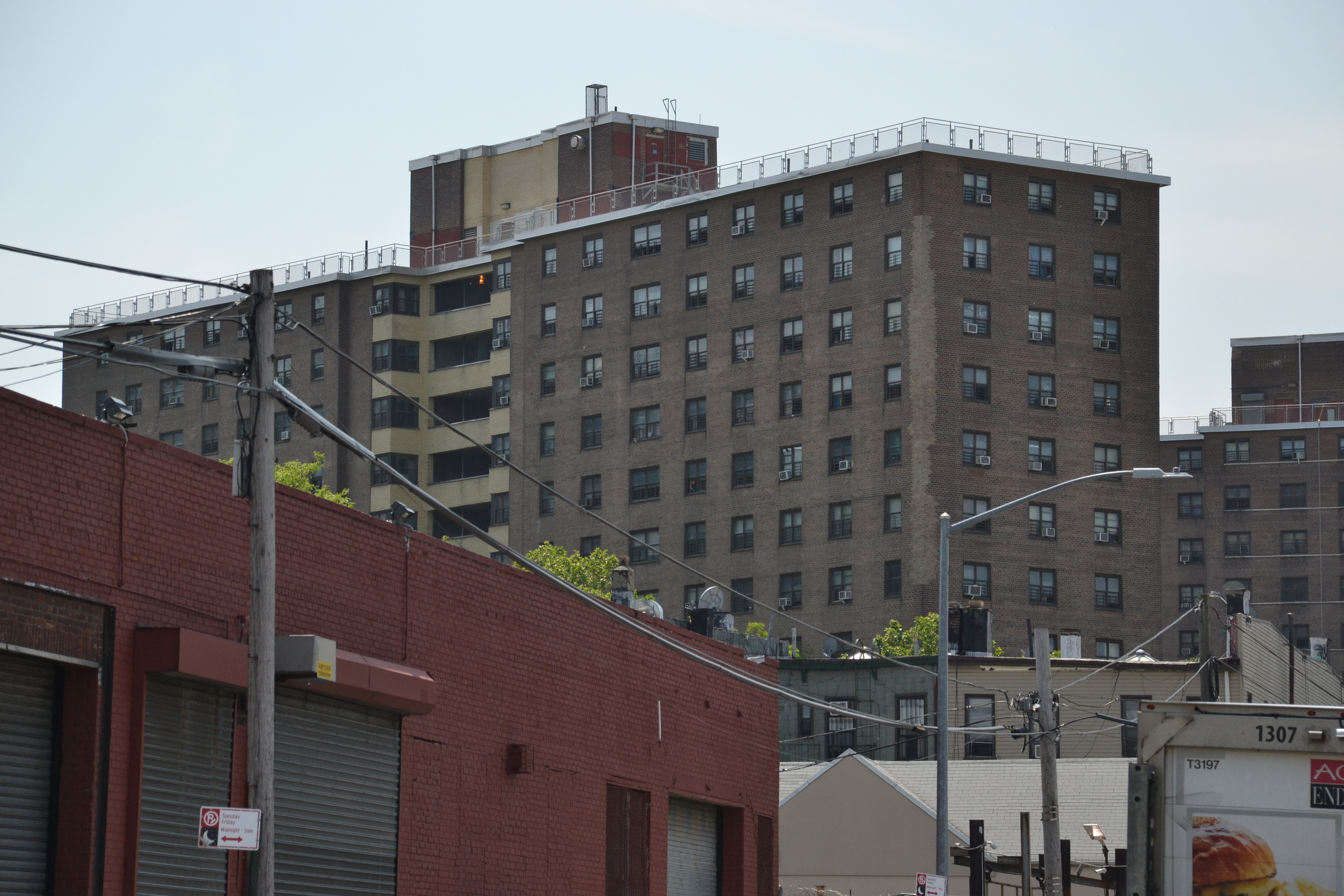
But that’s the eye of an outsider with a camera, who only sees the shine and glitz. Just like London, between the tourist traps, there are washing lines and public brawls and families paying bills. There are so many ugly apartment blocks poking between the glass towers, like edges of real life intruding on the Sex in the City gloss.

The danger of the traveller, the real tourist trap, is accidentally substituting actual places for fairy tales--stories that are easy to swallow--because you spend too much time fixating the famous bits, or comparing what you find to what you know back home. 

There’s an army recruitment station in Time Square, and that sums up all the worst aspects of America.

That isn’t true at all.

It’s just a fairy tale from New York.


Bohemia In Brooklyn

Brooklyn


When JFK contacted me to say they’d found my luggage, I was up there like a shot.

Losing your backpack is a huge blow, especially when it's your own fault. Flushed with jet-leg and New York excitement, I'd accidentally taken the wrong bag home from the airport (I know), and it had been up to the staff at Norwegian airlines to save the day. 

It took a day and a night for my bag to be found, leaving me to contemplate life without a toothbrush or clean underwear. When my bag was finally unearthed, it meant a midnight expedition to the airport to retrieve it. 
Riding back from the airport in a taxi, clinging to my salvaged baggage, I realised that my New York taxi driver had--despite his protests otherwise--become very, very lost. This was not the neighbourhood of my hostel. We were driving in circles through a dark mess of shuttered shops and squat apartments, somewhere near Brooklyn. There was a gas station on the corner, splashed with red and white lights. Police cars were crowding under the gas station's neon roof. A circle of officers huddled around a man lying prone on the tarmac, in a puddle of dark liquid.

'Oh shit,' said the taxi driver, in broken English. 'There’s been a shooting there.'

***

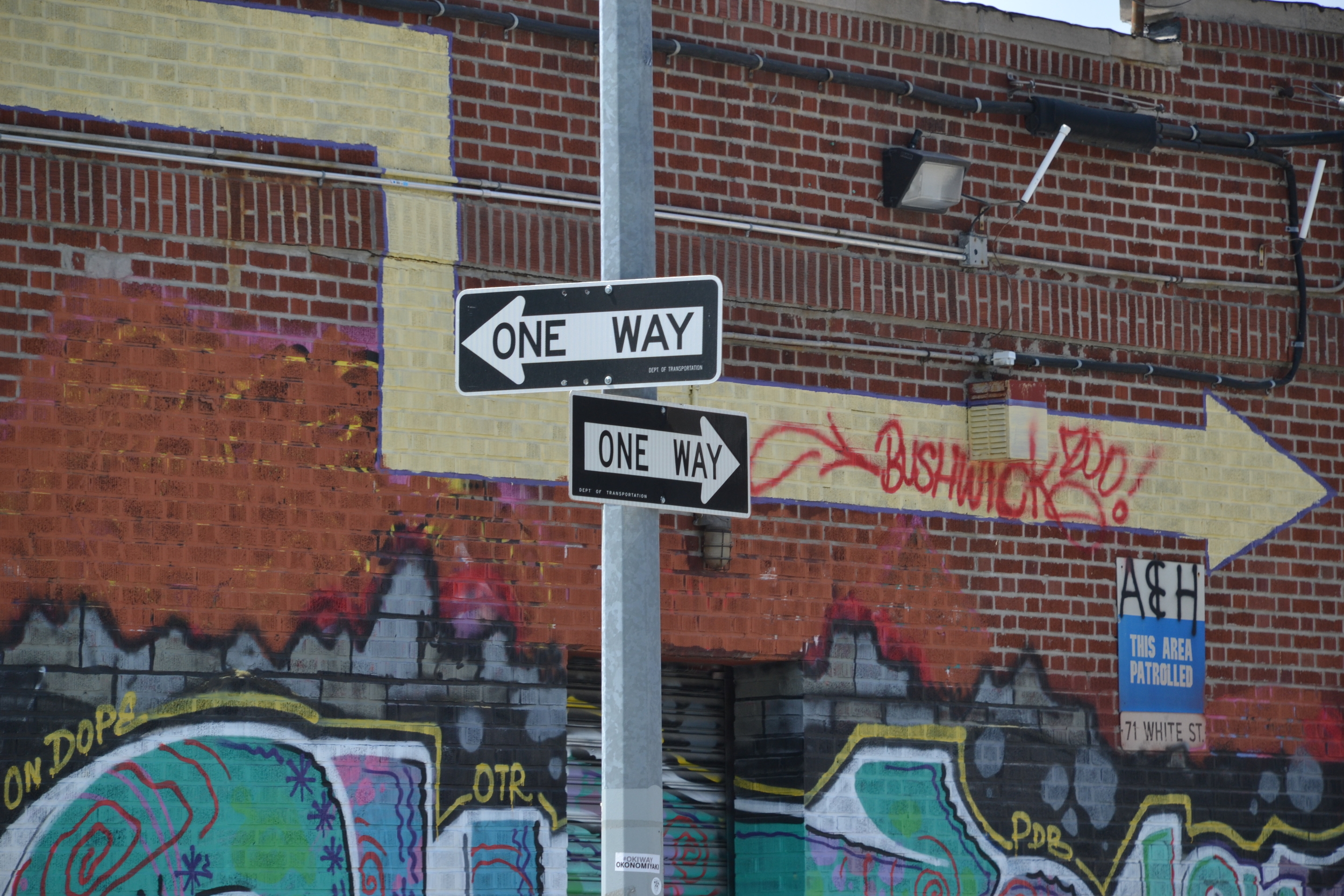
Street art in East Williamsburg, Brooklyn

***

Apparently, the neighbourhood I'm staying in used to have a lot of crime.

Not anymore. I'm in a hostel in East Williamsburg--one of the trendiest, most up-and-coming parts of Brooklyn. By day, the area looks off-puttingly like industrial district. It's filled with squat warehouses, loud with the patter of construction, crowded by cement trucks lumbering along wide streets in small herds.

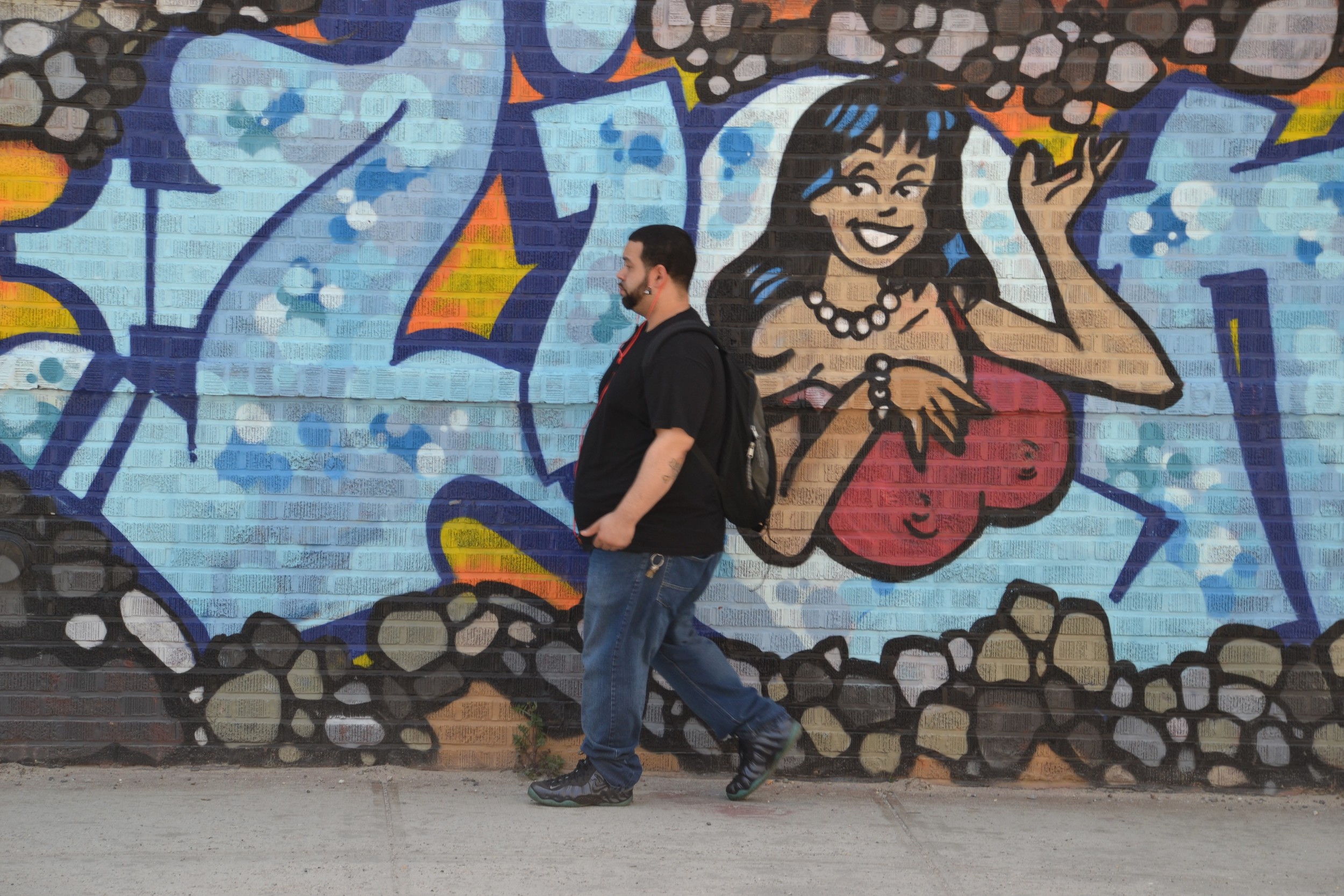
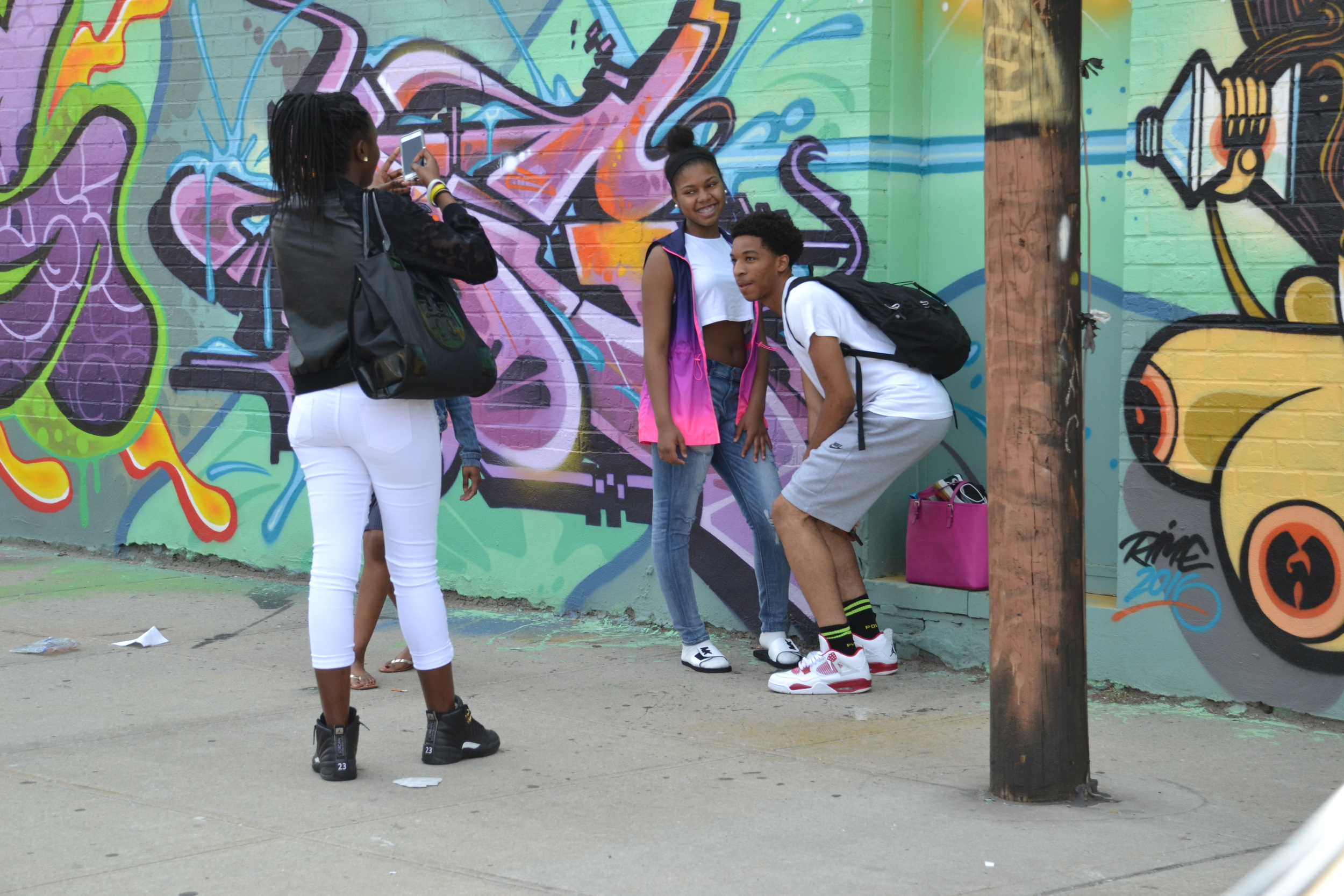
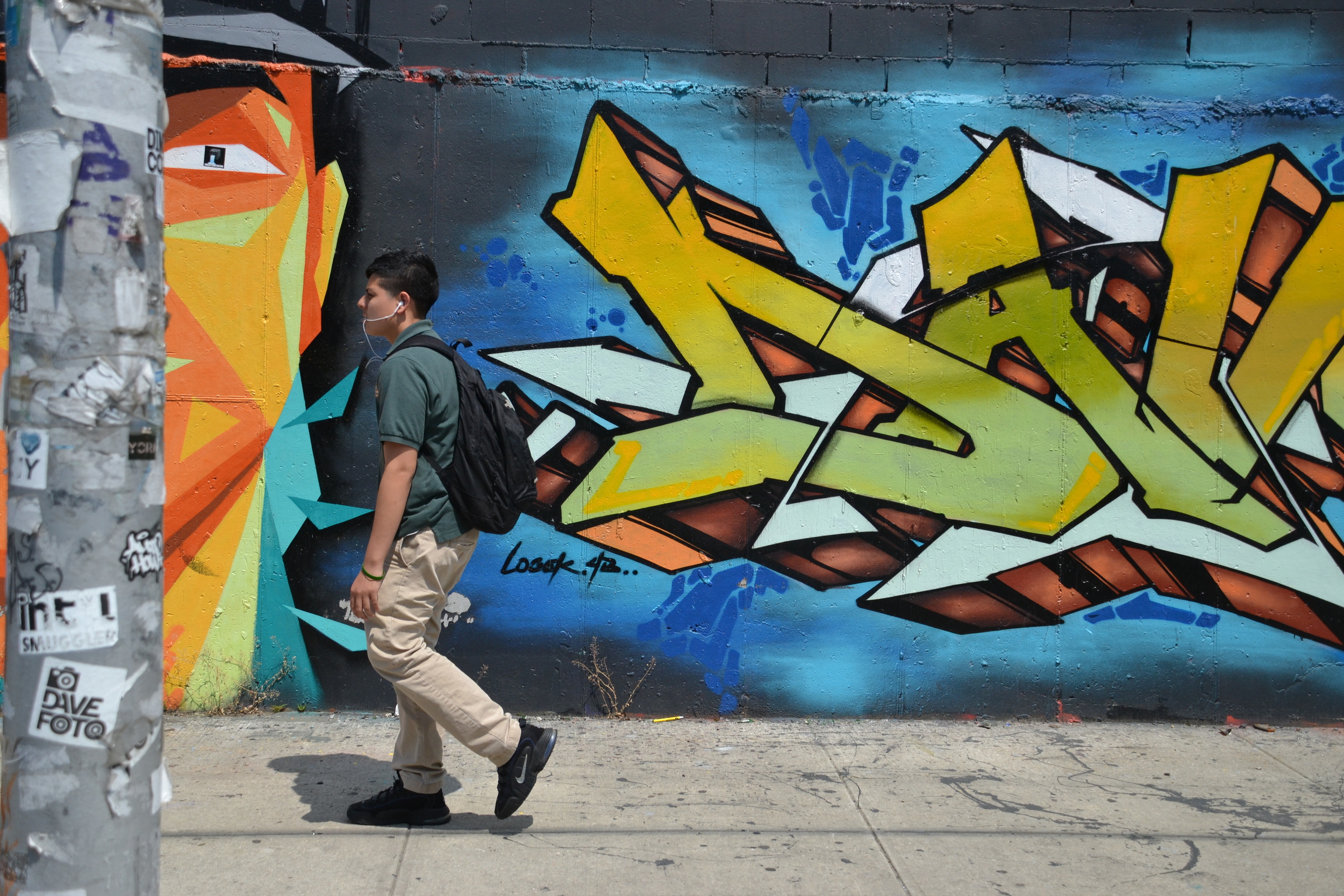
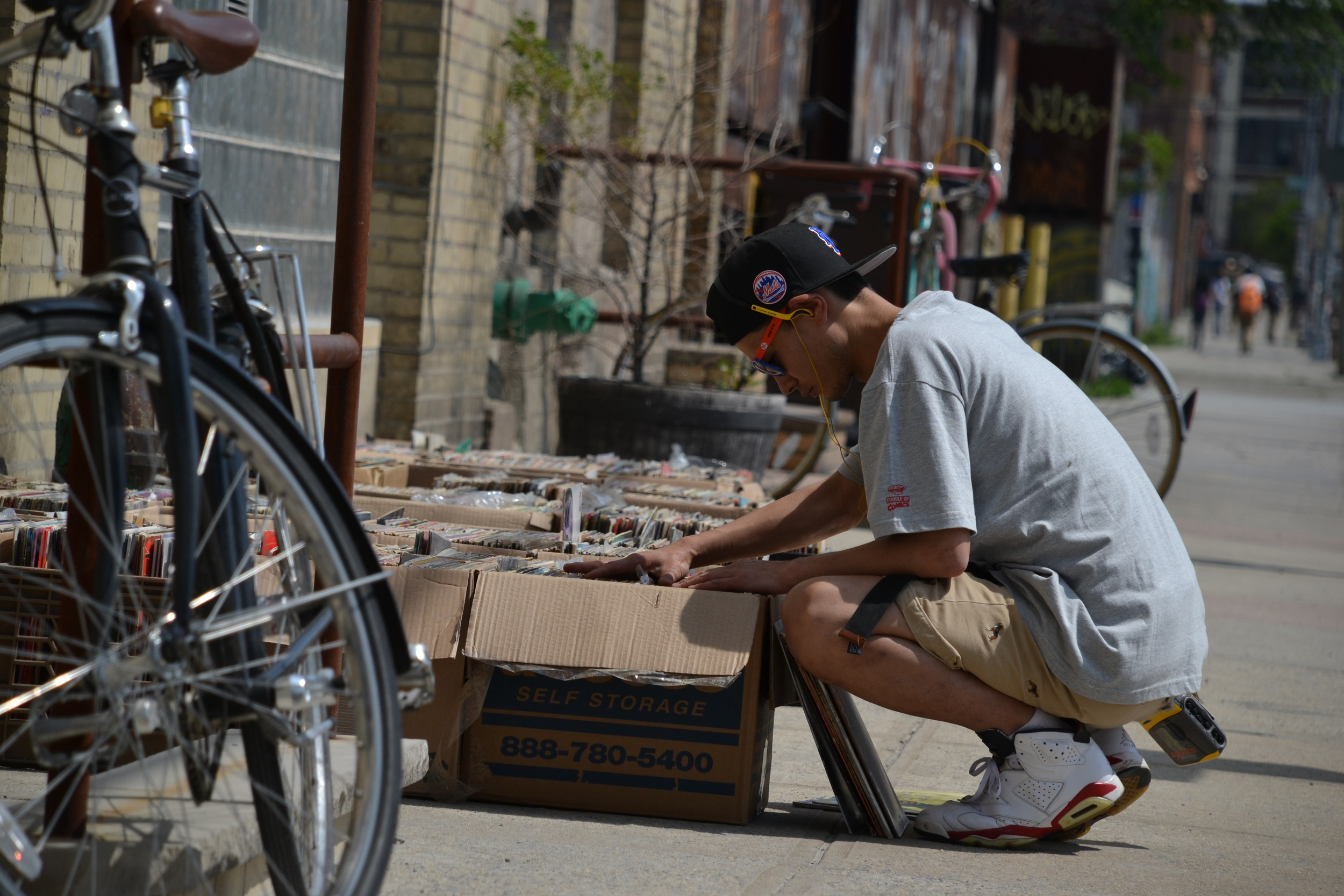
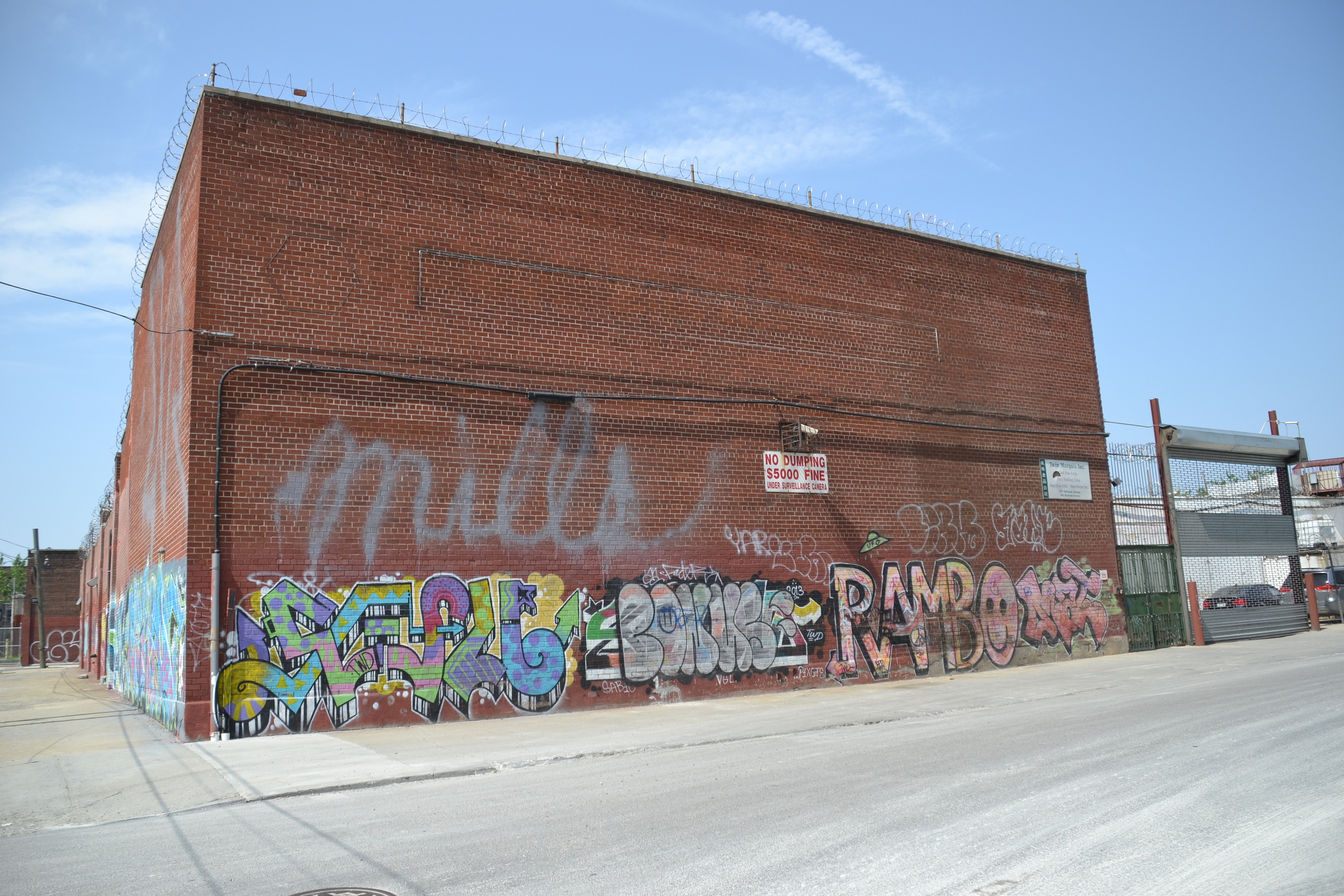
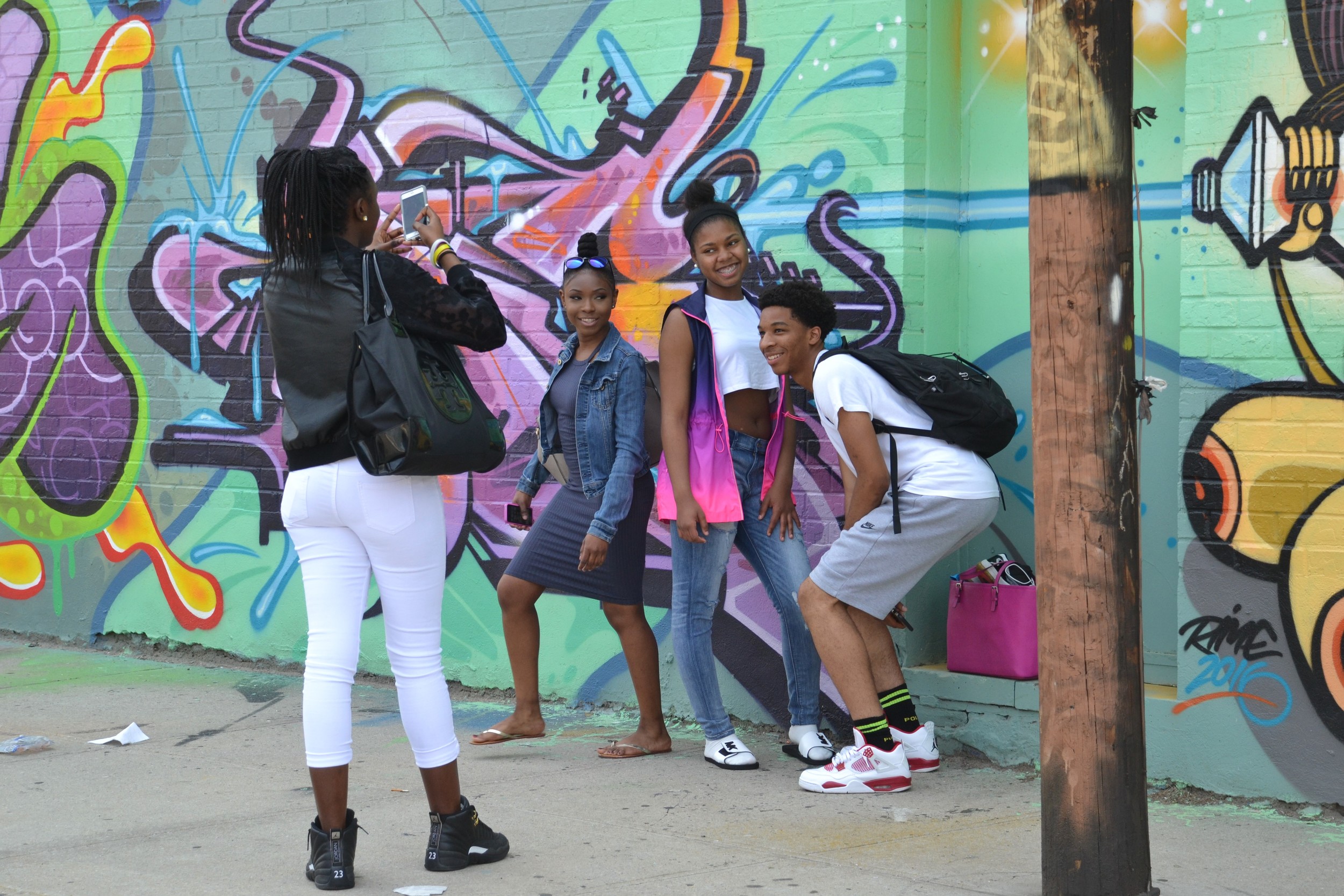
But look carefully amid the noise, and you'll find plenty of colour. The whole neighbourhood is filled with graffiti, fresh art dripping from the walls. By Morgan Avenue, the local subway station, people are selling second-hand books and VHS videos, piled on little stalls. Unassuming doors in the graffitied walls lead into trendy cafes, crowded with young people sipping on ice tea.

Come night, the industrial district gives way completely. The cement trucks slink away, and bars and restaurants open. Amid empty warehouses, little canopies unfurl, thick with fairy lights and coloured bulbs. Artists spill out of basement galleries, chatting on the sidewalk. A van on a street corner sells vintage clothes well into the night.  The New York hipster crowd comes ambling out to play.

Bohemian is the word, I think.

***

Hipsters love their vinyl records.

***

‘In the late 90s, early 2000s, this place was desolate,' a man named Mike told me, on my first day in the neighbourhood. Mike was a big guy with a belly lounging in its vest, wearing a frazzled beard and a necklace heavy with glittering trinkets--fragments of rock and metal. He was an artist, and a pretty good one at that. ‘Drugs, crack, hookers, everything,' he added, recalling the old version of East Williamsburg. 

We sat together in a street-corner park, watching kids play in the sweltering sun; basketballs bouncing between groups of teenagers, predominately black. 'Now it’s the place to be,' Mike mused, 'it has an energy, you can feel it go when you leave the area--it’s spiritual.'

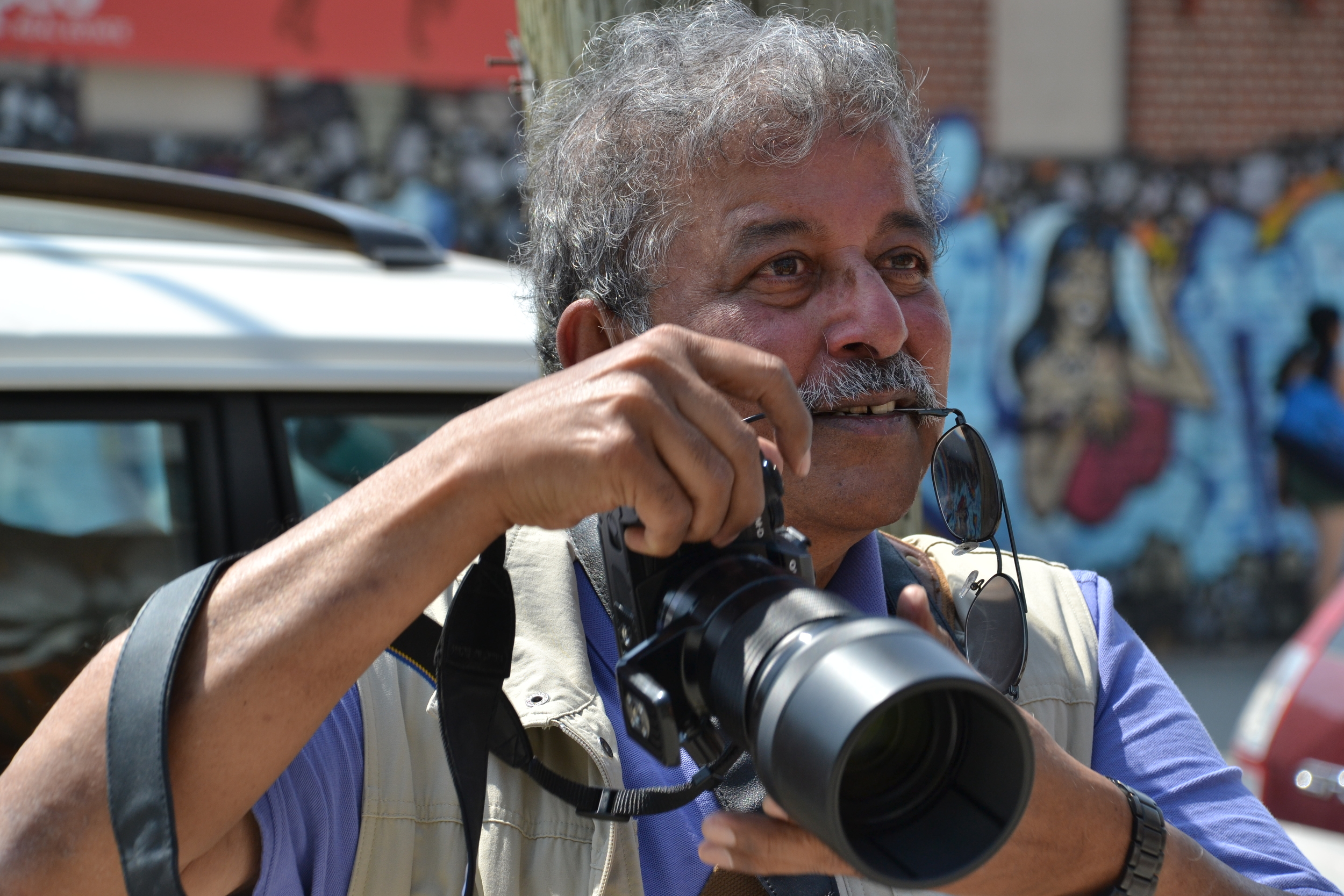
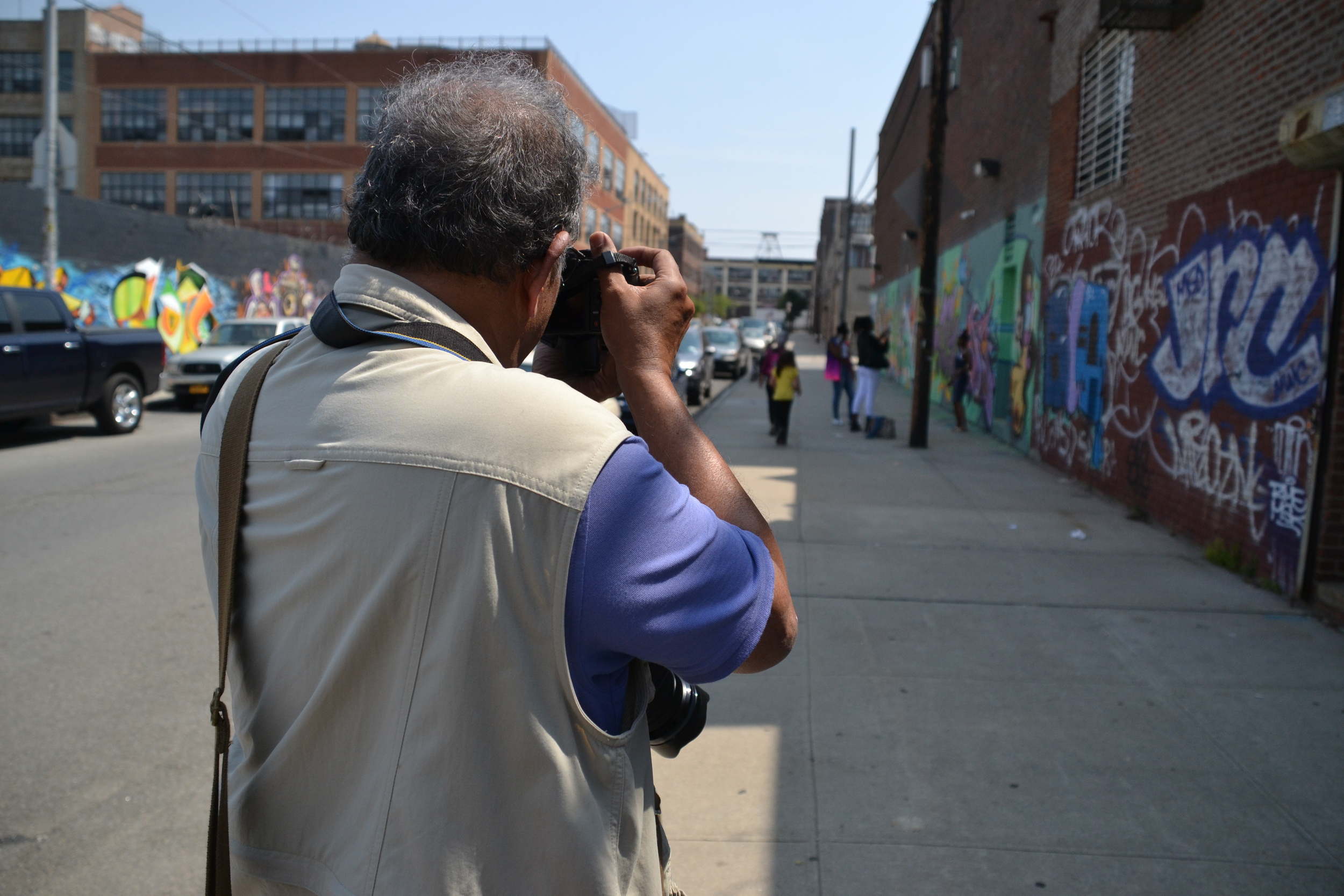
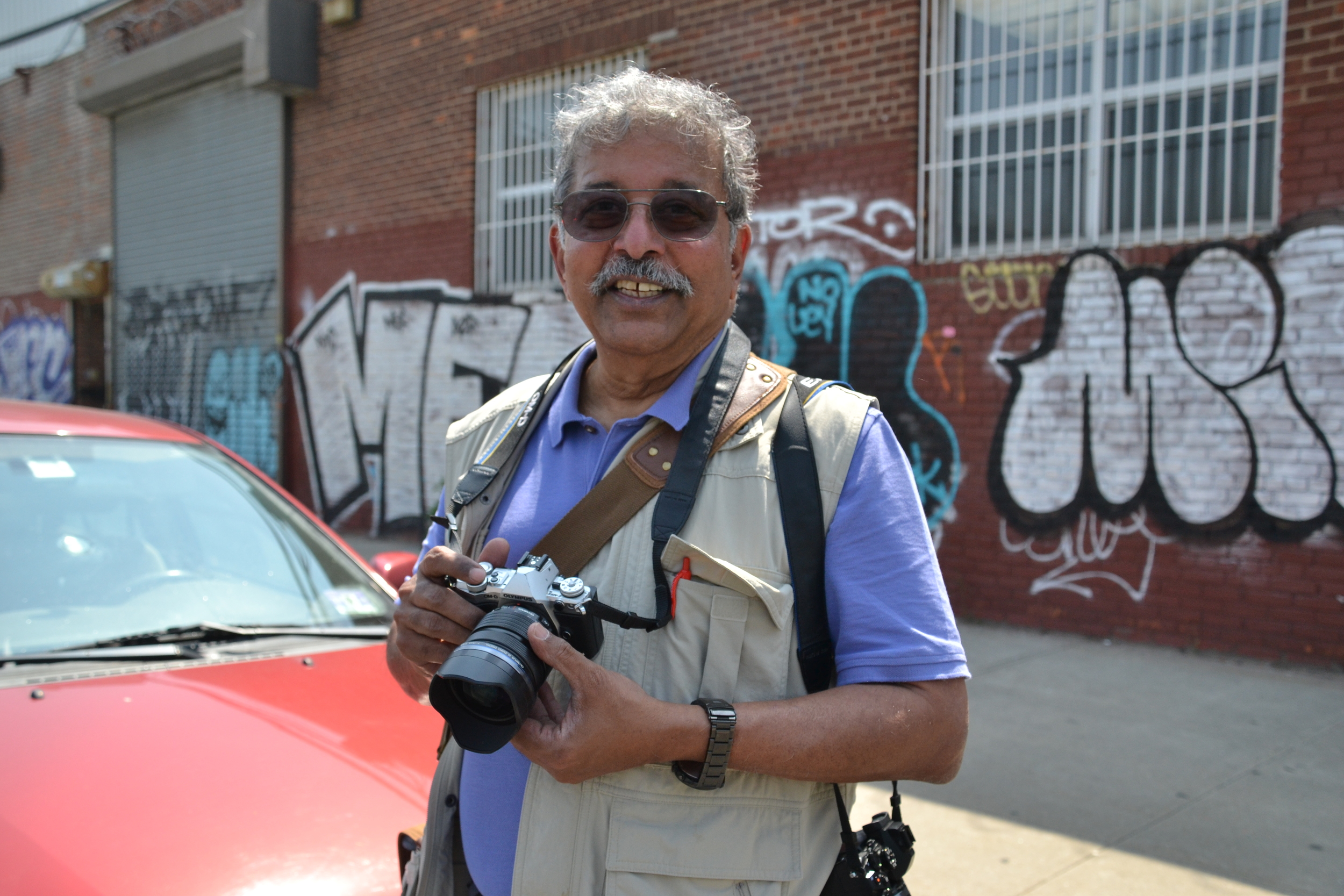
Nearby, a friend of Mike's was darting around the park, wrestling with the multiple cameras around his neck. Named John Isaac, he was once a photojournalist for the United Nations (not to mention a personal photographer for Michael Jackson). Now retired, John has found he can't stop taking photos of New York city streets.

'My wife is always saying to me,' John told me confessionally, between snaps, 'you're 73 fucking years old, you're not a young man anymore.' But John can't help it; everywhere he goes, he sees new photos that need taking.

John Isaac, unstoppable photographer.

Mike and John share an art studio together in Yonkers; another once-rough neighbourhood that’s slowly creeping into vogue, with old factories and warehouses becoming studio apartments for artists. East Williamsberg is a little further along the same evolution; it's well into courting gentrification, but still feels abuzz with underground energy. It's the perfect place for people like Mike and John to come for urban inspiration.

They were friendly conversationalists, perfectly willing to start chatting with a perfect stranger like myself. But then, it's that kind of area. 

A little later in our talk, Mike drifted away from the topic of the neighbourhood and started explaining how evolution didn't happen, and how the world is secretly run by a shady cabal of shadowy figures, intent on stymieing human spiritual potential. He lit a cigarette that wasn't filled with tobacco, and became impassioned on the subject.

I found that part of the conversation a little hard to track.  Nearby, John Isaac shook his head ever so slightly, and began earnestly advocating for evolution; a gentle debate pinging back and forth between them.

That's the thing about Bohemia, I guess.

You're hear all sorts of things.


Just Like In The Movies (New York)

It's quite hard to take pictures from inside a landing plane. 

It's quite hard to take pictures from inside a landing plane. 

I know how this part is supposed to go.

A fragment of rainbow passes by the window, as the plane descends through cloud. On the screen in front of me, my in-flight movie (Star Wars: The Force Awakens) has been paused. Instead, the screen is now showing a comically large cartoon aeroplane passing over a comically small cartoon map of America, while the pilot chirps over the intercom about preparing to land at JFK.

You’ll notice I said the window, not my window.

I am sitting in the middle isle on the starboard side of the airplane; there is another person between me and the nearest window. She is a lovely, friendly Canadian artist travelling to America to put some work in a gallery. She has sharp eyes and raven hair, and right now I hate her with the fire of a thousand suns.

I know how this part is supposed to go. If this was a movie (if it were my movie, as we are all occasionally guilty of wishing), I would be sitting by the window, watching New York come into sight with wistful awe. Instead, I am left fidgeting for glimpses as the plane tilts and dips and drops toward its destination.

Clouds resolve into grey ocean. There is a distant black blotch on the horizon; a boat fading into view, followed by another, followed by another; the granite sea suddenly crowded with dark shapes. I strain toward the window as best I can, and see an orange band rip across the slate coloured sky.

Shafts of gentle flame are falling through the clouds, raking over the coast below--lighting up a city that’s sprawled across islands. Most of the islands are crowded with houses, with tower blocks standing up between the tiny homes like upright Lego bricks. Bridges spring between the islands, busy with lines of roving traffic.

The skyline has become the looming metropolis of Manhattan--a platoon of skyscrapers set dark against their orange backlight, divas showing off. 

The plane skates down, touching the runaway. It turns to find a berth, and my view is replaced by the tarmac of the airport. No longer in the sky, reality must assert.

Everything looks better from above. It can't be like that on the ground.

That was New York.

Just like in the movies.

The Town At The End Of Humanity

I come from a town called Luton.

It isn’t very nice.  

Luton is a sprawl of houses dropped across a valley in the East of England, along the meandering River Lea. It's home to about 210,962 people, and it occasionally makes the headlines because a lot of those people aren’t white. 

Whenever there's an editorial, list or poll ranking the worst places in the UK, Luton invariably shows up somewhere near the rancid top. It has a high crime rate, an ugly look, and a tendency to be used as a lens for discussions on the failure of multiculturalism. After all, it's a working class town with a high migrant population, notorious for birthing religious radicals and extremist hate-groups like the English Defence League. 

A recent article in The Sun went so far as to dub Luton: "The Town At the End Of Humanity," based on the studious musings of a reddit thread.

Which, if you ask me, is a waste of a perfectly good book title. 

***

***

Luton is famous for its international airport.

The local economy used to be based around manufacturing straw hats, and after that trade died off, around a Vauxhall car factory. But now the straw hats are gone, and while Vauxhall's head office remains in town, the factory has closed. Luton touts its a raucous annual carnival and a university popular with foreign students (possibly because they don't know the town's reputation), but the airport is what it's known for.

Pointedly, the airport is called London/Luton Airport, emphasis on the London. Tourists don't come to visit Luton; they pass through it on their way to other points. 

A cruel joke about Luton is this:

The town's primary export is people who are desperate to be somewhere else.

***

***

It's the little things you remember.

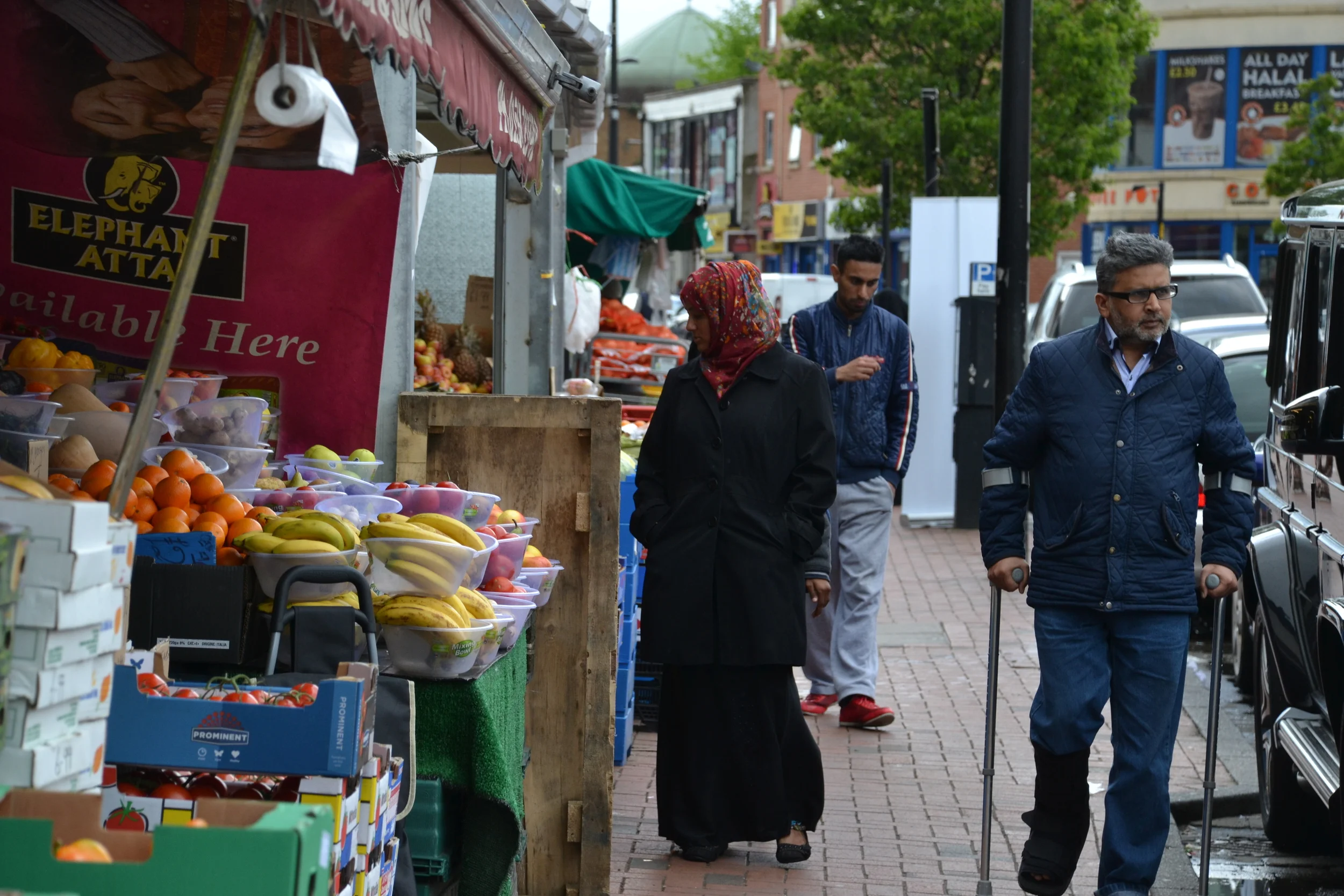
I'm sixteen years old and covered in spots, talking to a pair of Muslim girls in Luton's Arndale Shopping Centre. They're each cradling an enormous tub of Pick-N-Mix. It's Ramadan, they explain to me, the time of fasting. They're saving the sweets for sunset, at which point they will scoff them all for a gigantic sugar rush. Quick relief from the fast.

I'm thirteen, and sitting in a high school classroom that stinks of deodorant and apathy. A substitute Maths teacher is trying to keep things in order, but the kids have deliberately decided to find his name unpronounceable. Balls of screwed-up paper are flying from desk to desk. Occasionally someone will mock the teacher's thick South African accent.

I'm twenty-two and home from university. A handful of Polish supermarkets have opened in the town, thanks to a recent wave of new arrivals from Eastern Europe. I'm standing in one, staring blankly at boxes of breakfast cereal, wondering if I might find pierogi elsewhere in the store. I've been to Poland, I think to myself. I ought to recognize more of these words. 

Luton's multiculturalism is a complicated thing; a diverse population in a poor area inevitably leads to tensions and conflicts. But it also exposes young people like myself to a greater variety of worldviews than they might otherwise get. Without it, my home town would be even less remarkable; just poverty and luggage rushing to the airport. Instead, I grew up in a seething mess of different peoples, jostling together and apart. Colour on the brick and concrete--for, I hope, more good than ill. 

I've always been surrounded by different cultures. I've never been allowed to think of mine as the only one.  I've always wanted to go out and see more. 

It may be The Town At The End Of Humanity.

But it at least gave me a place to start. 


EXTRA BITS:

For anyone curious, here's a breakdown of the town's demography. Luton has a 54.6% white majority, though that includes both the town's Irish population (3%) and White Others (7%).

Overall, Luton considered a White-British minority town; one of three in the UK, including Leicester and Slough. Nevertheless, 81% of the population identifies as British regardless of ethnic background--so it can still be safely described as overwhelmingly British, if not overwhelmingly white.

...Though as someone who has to tick the "Any Other/Mixed," box on forms, I'm a little wary of these kind of statistics. They always make me feel like I'm some kind of ethnic cocktail. 

What's The Big Bang Good For?

Let's talk about The Big Bang.

No, not that one. I mean The Big Bang Young Scientists & Engineers Fair – one of the largest science celebrations in the UK. 

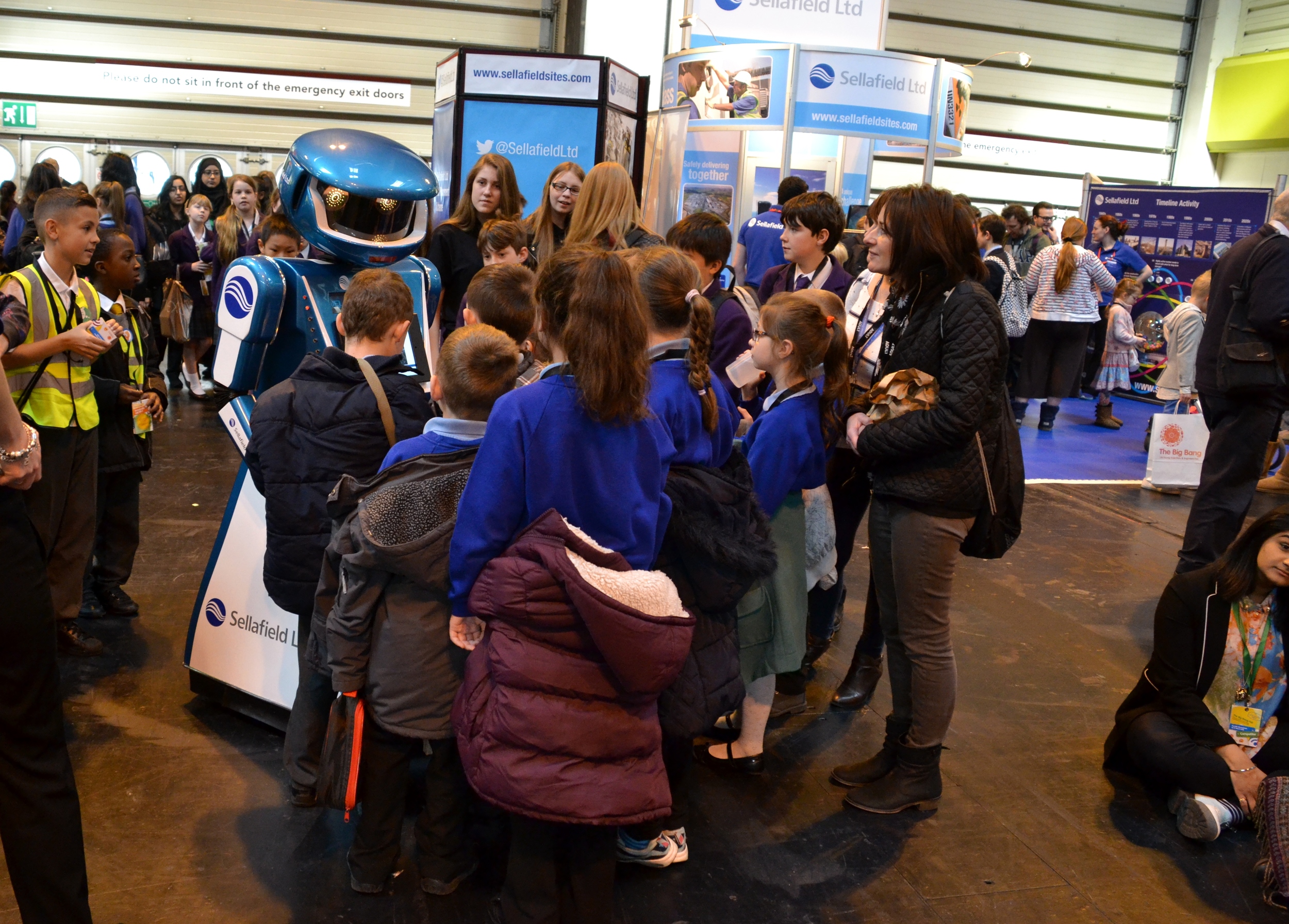
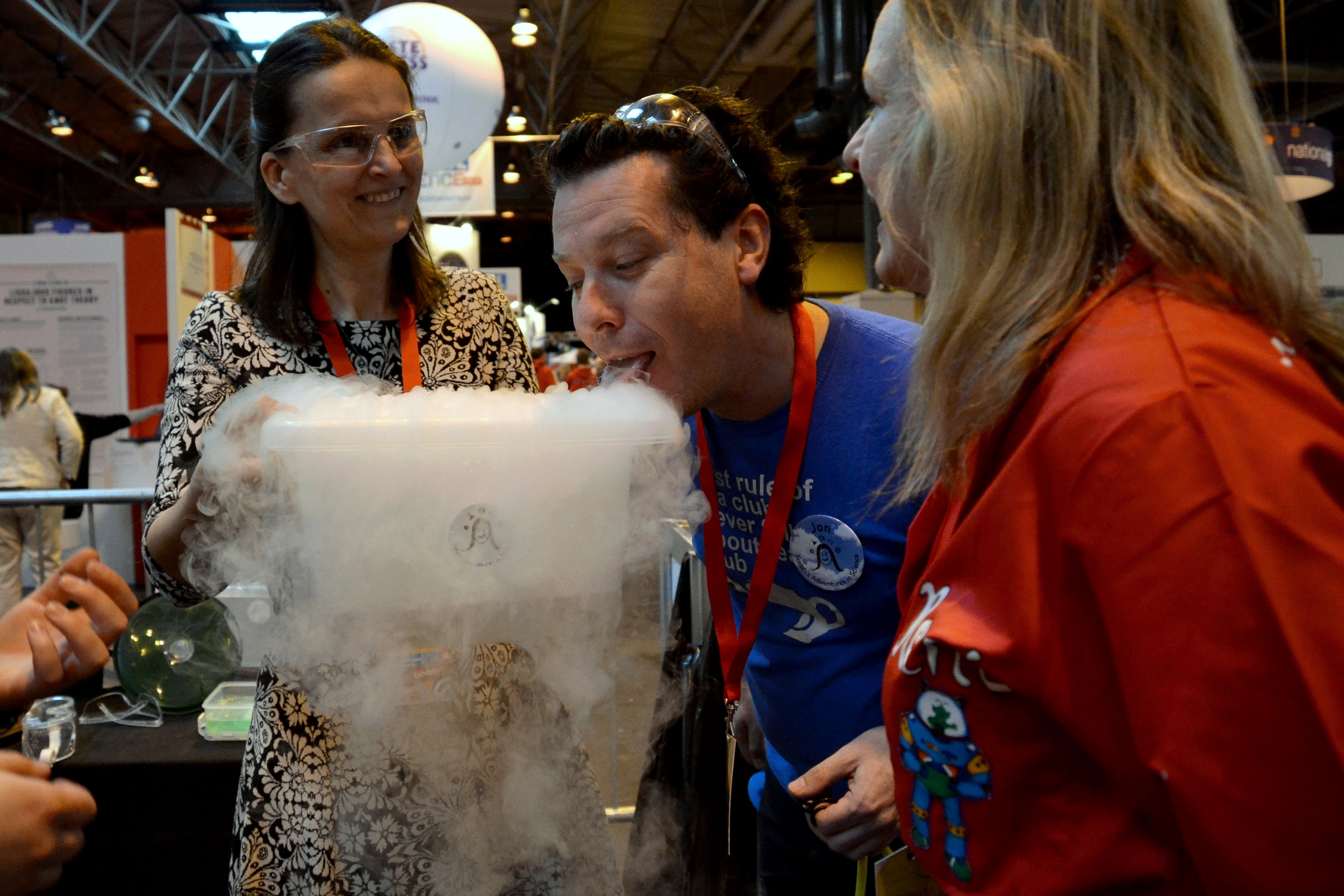
Held in the Birmingham NEC – a cavernous space that resembles a cross between an aircraft hangar and a shopping mall – it’s an explosive cavalcade of technology, science, maths and engineering.

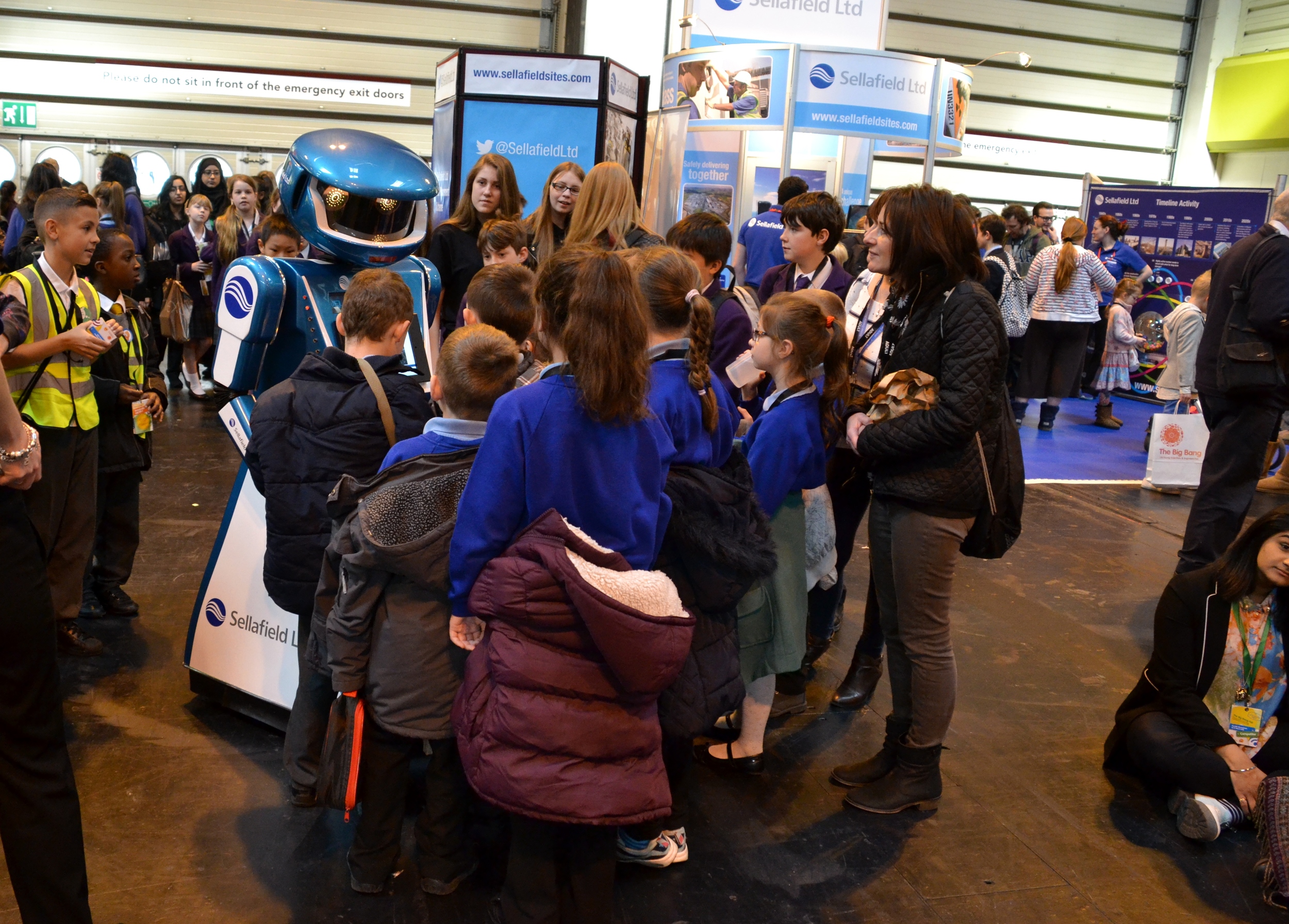
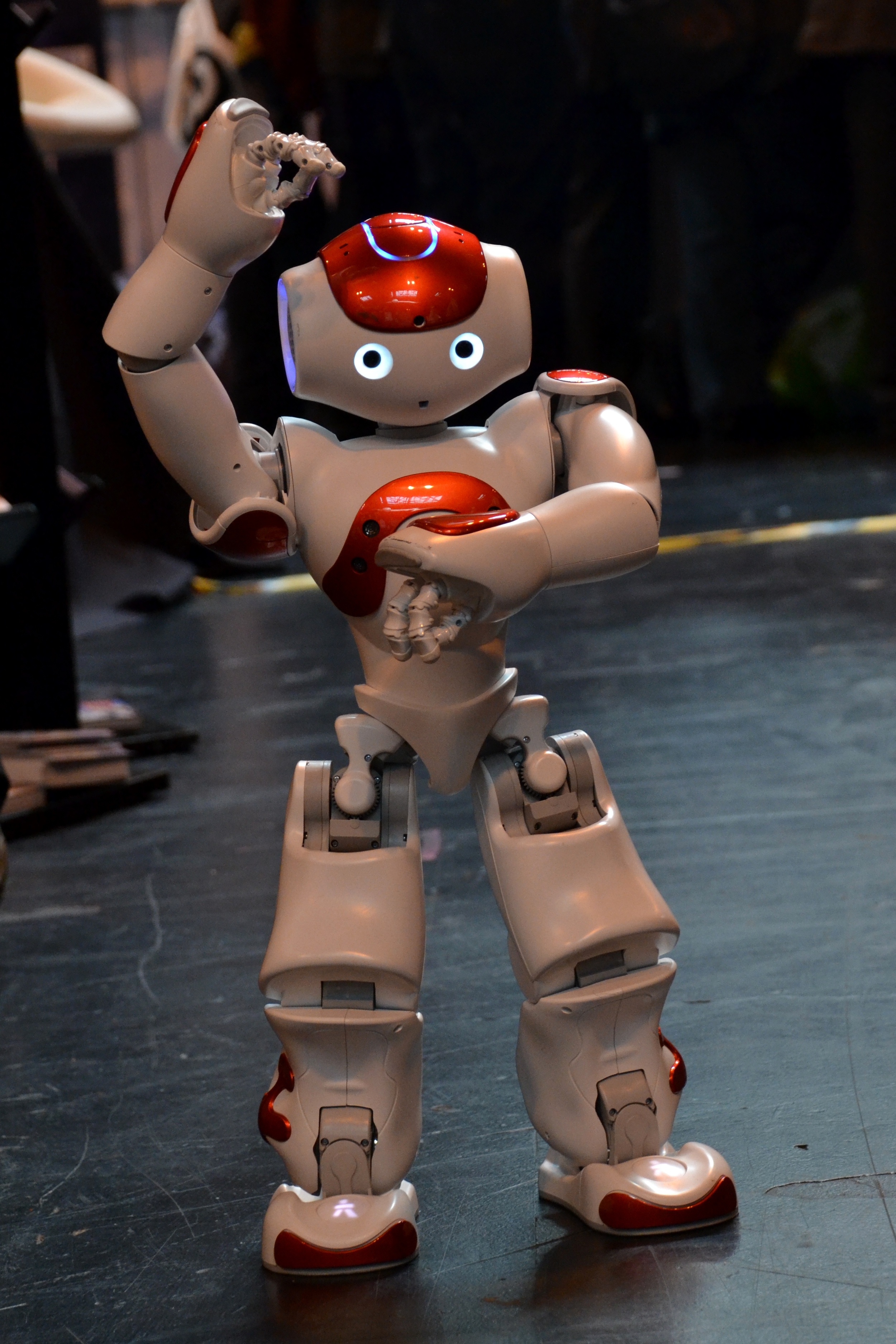
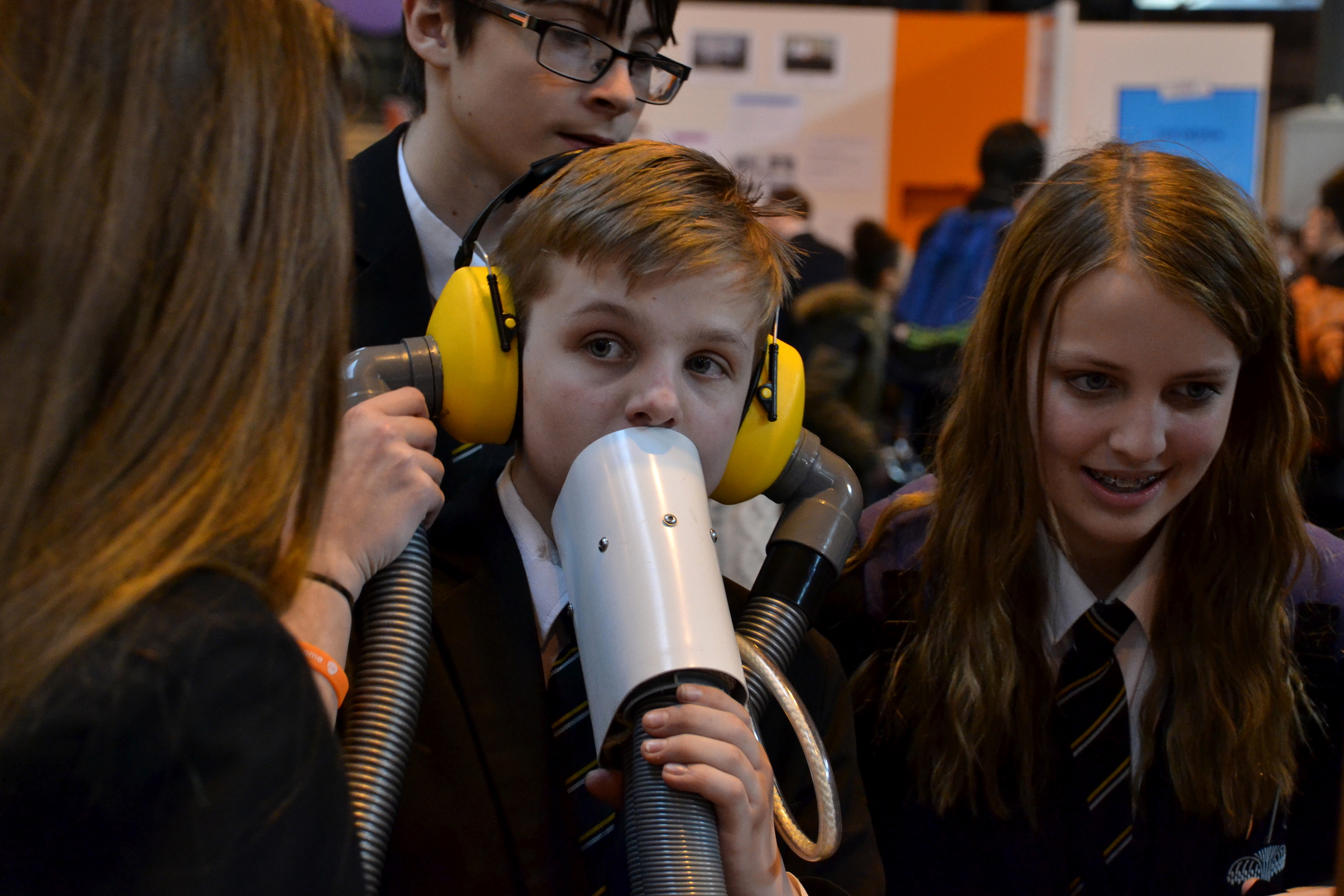
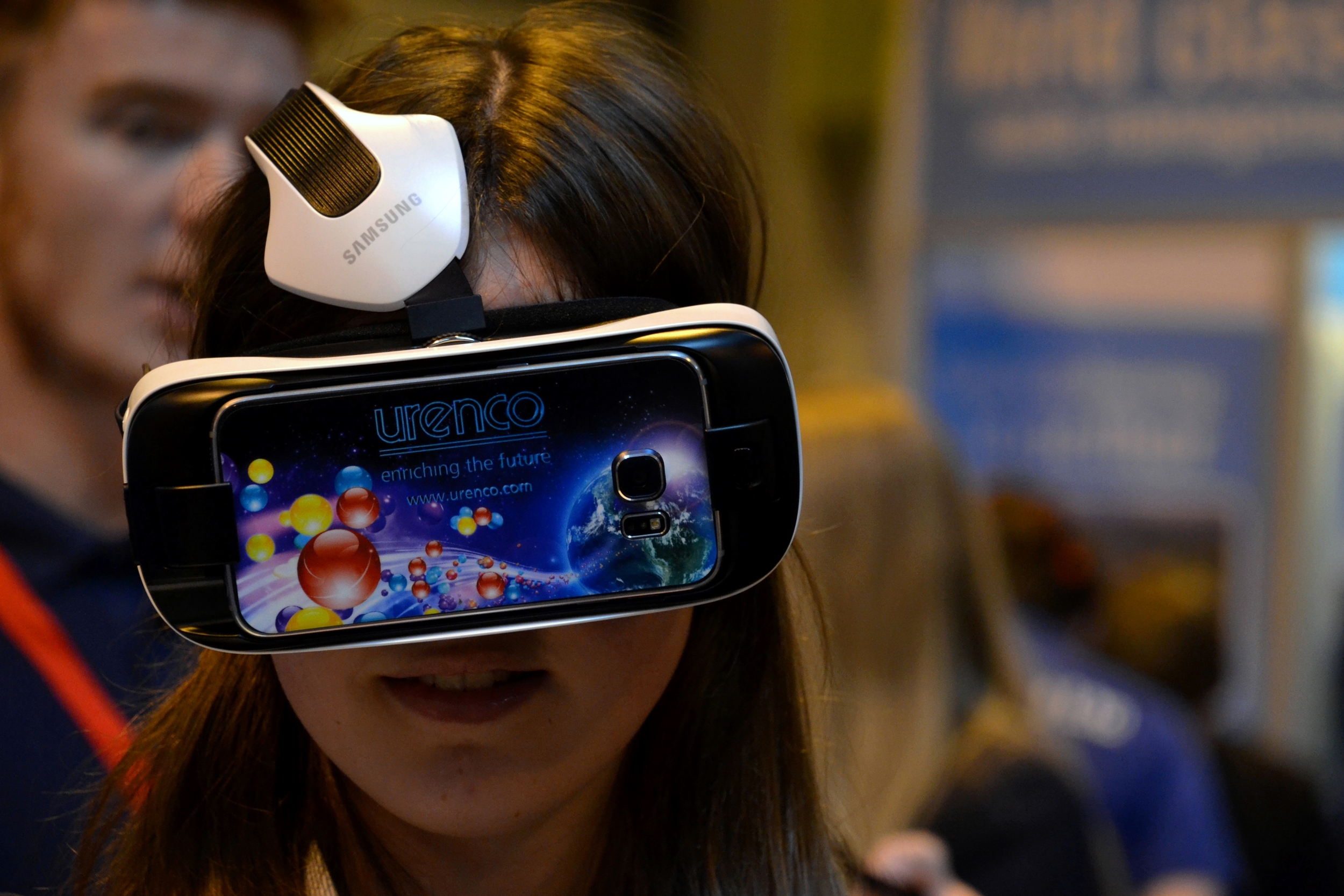
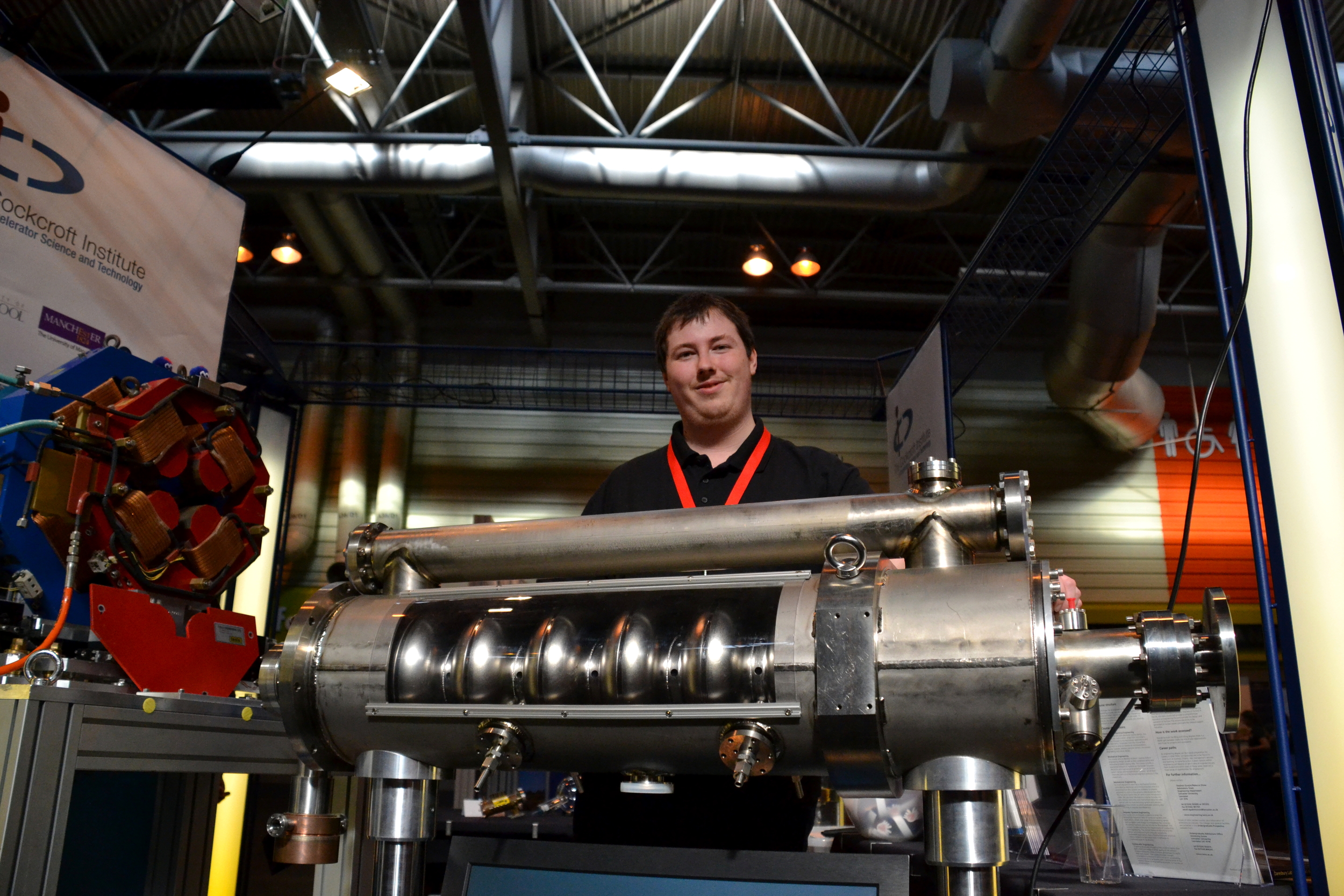
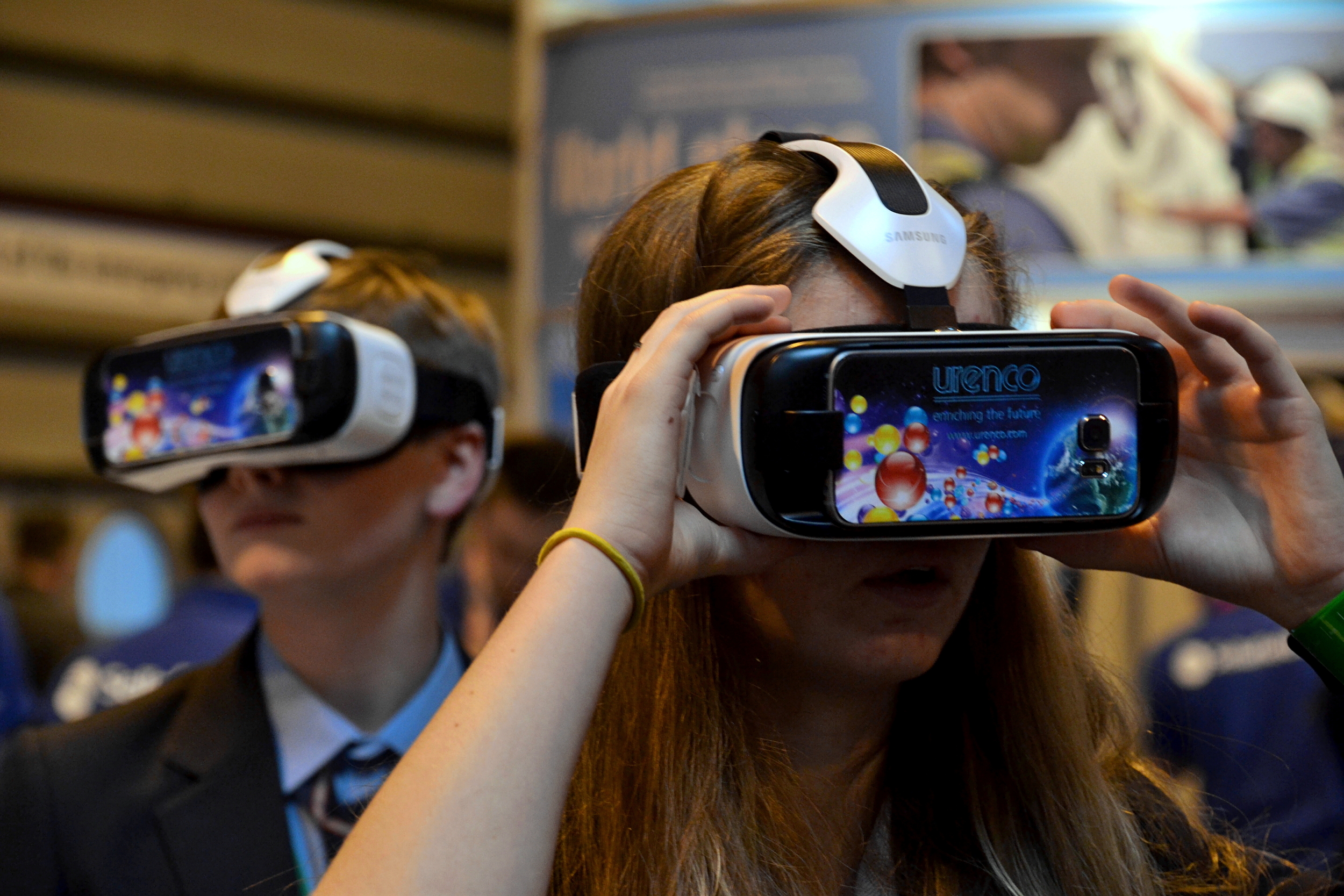
Every year, thousands of children from all over Great Britain come crashing through the Fair, dragging tired teachers behind them, jumping up and down as they sample exhibition stalls covered with robots, magnets, VR helmets, and all sorts of other shiny toys to play with.

As one of many volunteers who helped run the 2016 Big Bang Fair, I have to say, I found the swarming children rather inconvenient.

I wanted to play with the robots.

***

***

The word “scientist” was first coined in the year 1834 by William Whewell – reverend, philosopher and Master of Trinity College, Cambridge. After agonising for some time over what to call folk of scientific inquiry (hitherto known as “natural philosophers,”) he chose “scientist” as a logical extension of the word “artist.”

If a person who does art is an artist, Whewall reasoned, then a person who does science must be a scientist (the word “science” is actually much older than “scientist,” dating back to the 14th century).

It’s appropriate, I think, that the word “scientist” derives from “artist.” After all, no matter how rigorous the scientific process applied, things always start with a creative spark.

***

***

The main draw of The Big Bang Fair is its awards.

Children from age 11 to 18 are invited to bring their own personal science projects to the fair, where they’re examined by judges. A lucky few will win prized titles like UK Young Scientist of the Year.

While waiting for the robots to free up, I perused a few of these projects.

I met a group of teenage boys who had designed a disability-friendly hot rod, then built it by themselves from scratch.

I spoke to a teenage girl who had made an oil-based UV sun-blocker, and turned her phone into an improvised UV-light to demonstrate it.

I was awed by a 15 year-old prodigy named Krtin Nithiyanandam, who had taken some time out from being a teenager to create a new early-stage detection method for Alzheimer’s.

Never mind creative sparks. Kids like that have wildfire talent. 

***

CSC_1465b.JPG

***

Unfortunately, in the current austerity climate, events like The Big Bang Fair are increasingly in danger of being regarded as expendable luxuries. They’re not. They’re essential, and not just because they provide lots of shiny toys to play with.

They’re where tomorrow’s scientists come from. More crucially, they’re where tomorrow’s scientists discover that imagination gets results. That science thrives on creativity as well as solid process. And that sometimes, it pays to be able to redesign the box.

They’re where the future learns to happen.

And most importantly, they’re where I get to play with robots.

EXTRA BITS:

>The first use of the word "scientist" was in Whewell's 1834 review of a book by Scottish science writer and polymath Mary Sommerville. In this review, Whewell makes a vaguely progressive if rather muddled attempt to talk about women in science, calling Sommerville "One of the brightest ornaments in England."

>Meanwhile, in the 21st century, this year's Big Bang Fair seemed gratifyingly interested in tackling the issue of women in STEM fields, with with groups like the STEMettes roving the floor. 

>I got the opportunity to volunteer at The Big Bang Fair because I'm on the mailing list of the British Science Association. Check them out; they do good work.

>For more information on The Big Bang Fair, see here.

Brussels

The Botanical Garden of Brussels - which looks suspiciously like something out of Logan's Run. 

Brussels is a mix.

Parts of the city are old and beautifulfull of baroque balconies and gothic towers and quaint little cafes, with charming graffiti on the walls.

Parts of the city really aren’tthe EU Quarter and the nearby business district, both filled with concrete cubes and jagged glass skyscrapers. In the EU Quarter, the European Parliament sits surrounded by car-clogged roads and construction sites, drawing visitors from all over the world.  

The number of hotels is frankly startling.

I’m spending quite a lot of time in one of them.

***

The European Parliament is a distressingly random collection of shapes. 

The European Parliament is a distressingly random collection of shapes. 

***

Brussels is a city of 11.5 million people.  Overall, 30% of Brussels’ inhabitants are foreign residents. There are more foreign ambassadors in Brussels than in Washington DC. There are an estimated 30,000 political lobbyists working in the city, and 1200 accredited journalists (only 200 of whom are from Belgium). 

Think of all those interns, diplomats and reporters, just passing through on business.

***

The wall-art really is fantastic everywhere, though.

The wall-art really is fantastic everywhere, though.

***

It’s a nice hotel, of course.

That took some getting used to. My usual travel budget allows for hovels and hostels that sometimes lack luxuries like, say, hot running water.

But I’m here to work, so I get a big bed, a proper shower, and very little time to see the sights.

Looking out my hotel window, I glimpse office blocks and traffic lights, an endless procession of headlights crawling up the Rue de la Loi. Horns blare and engines grumble. It’s funny how the EU Quarter feels so much like a bubble of its own; a vaguely dystopian colony planted in the middle of rococo streets, full of people who are only here on business.

I ought to come back and visit properly one day.

But for now, I’m just passing through.

The almost pretty Boulevard Boutique, a short walk from the EU Quarter. 

The almost pretty Boulevard Boutique, a short walk from the EU Quarter. 

EXTRA BITS:

What work am I doing? A freelance gig writing minutes for a financial reporting group, which advises the European Commission. 

Some bits of Brussels I have managed to see, and recommend:

>The Atomium, near Heysel Metro. If you like science, you'll like this.

>The Grand Marketplace, which is just as pretty as it looks on the postcards.

>There's a little stand that sells chips in Place Jourdan. It's called Maison Antoine. It's really worth finding. 

> Why haven't I included a picture of the Rue de la Loi? Because it's just so pretty, I couldn't do it justice.